Mickey Kantor Quotes
Those who whine incessantly and maintain the romantic notion of a self-contained market speak against the interests of American workers and a growing standard of living. They are trafficking in fear and promoting ignorance while advancing their own political ambitions. No great nation has ever increased its worth over time by closing its markets. In fact, history is replete with examples of closed markets leading to destructive economic consequences.
A self-contained market would be one in which a country only makes products that it sells within its borders, and only sells products that in makes in the country. Very primitive cultures were self-contained markets, but trading generally takes place whenever two cultures interact unless politicians artificially prevent it.
Mickey Kantor, Secretary of Commerce (Democrat), U.S International Trade Representative (Democrat), Speech, Council on Foreign Relations, November 5, 1997
Sourced by: Eigen's Political and Historical Quotations

It was a classic economic protectionist practice to for an imperial nation to sell manufactured goods to its colonies, but not to allow the colonies to sell high labor value goods back to the mother country. The early American colonies were victims of this, and Brandgee was the leader of the protectionist wing of the Republican party. See {640519} for William Howard Taft’s opinion of him.


The nation, under the pressure of a depression, had adopted a free trade philosophy. We would go back to protectionism in the 1930s and back to free trade in the 1960s. Ironically, it was generally the Republican party that has driven these shifts. There has always been a free trade wing of the party and an isolationist wing.

The U. S. was very protectionist in its early history. Grant overestimated the time that it would take for us to change by about 100 years.


In October 2025 (ahead of ongoing trade negotiations), the Ontario Provincial Government (Canadian) produced a video ad distributed in the US using a voice-over of the above quote from a 1987 Ronald Reagan Presidential Radio Address. The ad uses five complete sentences from the five-minute weekly address, but they are spliced together out of sequence. Also, while the ad implies Reagan was against tariffs, it omitted the context that he was using the radio address to announce new tariffs imposed on Japan by his administration but that they should be seen as an unavoidable exception to his basic belief in free trade as the key to prosperity. He said, “our commitment to free trade is also a commitment to fair trade.” President Trump accused the Ontario government of producing a fraudulent ad and of attempting to influence the US Supreme Court as it prepares to hear arguments about the legality of Trump’s tariffs. As a result, the Trump administration terminated trade negotiations with Canada.

During Theodore Roosevelt's administration there was a movement for tariff reform. The Speaker advised against any change, and the President finally accepted his view:

It is interesting that the first national women’s political party was a strong advocate of protectionism and saw free trade as an unfair hurdle for mostly male workers. At the time, the Republicans were staunch protectionists, and the Democrats, the free traders thus illustrating that the major parties continuously flip-flop on major issues.

In England at the time, the liberals were for free trade and the conservatives against. In both England and America both liberals and conservatives have flip flopped their roles in foreign trade several times. Free trade is a two edged sword; it aids domestic growth, employment and prosperity in some cases and hurts them on others. And there are always winners and losers for each example of free trade within any country. The result is no long term commitment and much flip flopping.

Turgot was one of the most advanced economic thinkers in Europe and realized, even before most of the Americans, that by freeing itself England, that the Americans would be forced to become free traders and that in turn would make America a major Economic power despite the fact that American economic policy over the years vacillated between protectionism and free trade.


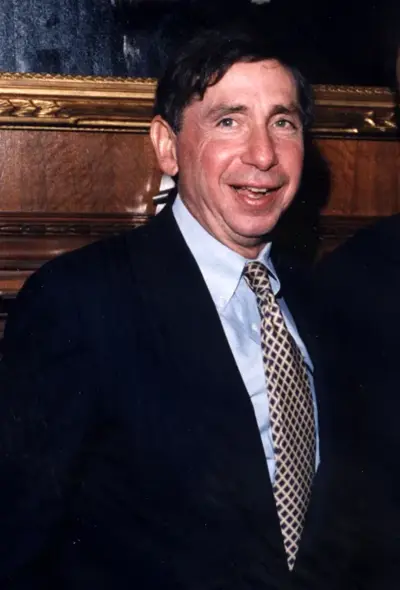
Michael Kantor is an American attorney who served as the United States Trade Representative from 1993 to 1996 and United States Secretary of Commerce in 1996 and 1997.
