Thomas Babington Macaulay Quotes
Free trade, one of the greatest blessings which a government can confer on a people, is in almost every country unpopular.
1st Baron Macaulay
Thomas Babington Macaulay, 1800-1859, British Historian & Secretary of War (Liberal), Member of Parliament, On Mitford's History of Greece, in Knight's Quarterly, November 1824
Sourced by: Eigen's Political and Historical Quotations


Democratic politicians of that era mostly opposed free trade because the experience ever since NAFTA showed that many manufacturing jobs were lost in the United States although many new jobs were created but few of these were good paying jobs that Americans with limited educations could perform as they were able to with manufacturing jobs. And during that period, the requirements for fair trade and foreign workers rights have been very poorly enforced. The Democrats split between those who thought that new trade treaties could be negotiated and enforced, correcting the problems of the past, and those who did not believe that such proper free trade was very likely.


The nation, under the pressure of a depression, had adopted a free trade philosophy. We would go back to protectionism in the 1930s and back to free trade in the 1960s. Ironically, it was generally the Republican party that has driven these shifts. There has always been a free trade wing of the party and an isolationist wing.


Whitaker was right bet at that time his advice was not heeded. When Ireland late in the 20th century finally acted on his advice and eliminated almost all of their protectionism, the economy thrived and not only did the Irish emigration stop, but people began to immigrate to Ireland for the economic opportunity.


During Theodore Roosevelt's administration there was a movement for tariff reform. The Speaker advised against any change, and the President finally accepted his view:


The U. S. was very protectionist in its early history. Grant overestimated the time that it would take for us to change by about 100 years.
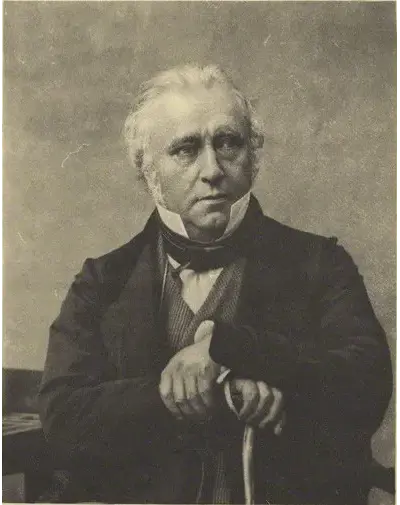
Thomas Babington Macaulay, 1st Baron Macaulay, FRS FRSE PC was a British historian and Whig politician. He wrote extensively as an essayist, on contemporary and historical sociopolitical subjects, and as a reviewer. His The History of England was a seminal and paradigmatic example of Whig historiography, and its literary style has remained an object of praise since its publication, including subsequent to the widespread condemnation of its historical contentions which became popular in the 20th century.
