Benjamin Franklin Quotes
The prosperity created at home and overseas by free expansion [of foreign trade] was infinitely greater than could be coaxed by restrictive mercantilism.
Benjamin Franklin, 1706-1790, Member of the Continental Congress & the Constitutional Convention, Governor of Pennsylvania, President of the Pennsylvania Assembly, U.S. Minister to France, Postmaster General of the American Colonies, L. W. Larabee, The Papers of Benjamin Franklin
Sourced by: Eigen's Political and Historical Quotations


5th Earl of Rosebery. With free trade, there are winners and losers. The advocates observe that overall, there is a great benefit to most countries engaging in free trade, but some sectors of the economy, and some areas and groups of people fare poorly.


Democratic politicians of that era mostly opposed free trade because the experience ever since NAFTA showed that many manufacturing jobs were lost in the United States although many new jobs were created but few of these were good paying jobs that Americans with limited educations could perform as they were able to with manufacturing jobs. And during that period, the requirements for fair trade and foreign workers rights have been very poorly enforced. The Democrats split between those who thought that new trade treaties could be negotiated and enforced, correcting the problems of the past, and those who did not believe that such proper free trade was very likely.


The U. S. was very protectionist in its early history. Grant overestimated the time that it would take for us to change by about 100 years.


Referring to NAFTA, CAFTA and other international trade agreements


During Theodore Roosevelt's administration there was a movement for tariff reform. The Speaker advised against any change, and the President finally accepted his view:

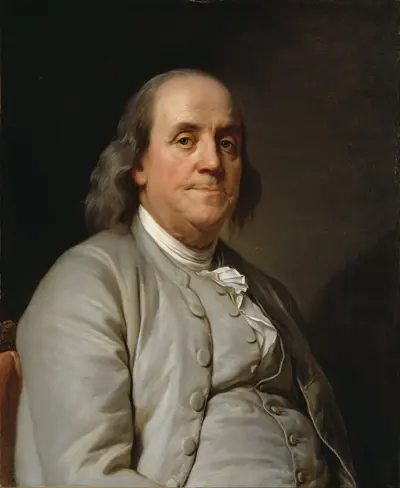
Benjamin Franklin FRS FRSA FRSE was one of the Founding Fathers of the United States. A polymath, he was a leading writer, printer, political philosopher, politician, Freemason, postmaster, scientist, inventor, humorist, civic activist, statesman, and diplomat. As a scientist, he was a major figure in the American Enlightenment and the history of physics for his discoveries and theories regarding electricity. As an inventor, he is known for the lightning rod, bifocals, and the Franklin stove, among other inventions. He founded many civic organizations, including the Library Company, Philadelphia's first fire department, and the University of Pennsylvania.
