Dudley North Quotes
When Interest is less, Trade is incourag'd, and the Merchant can be a Gainer; whereas, when it is great, the Usurer, or Money-owner takes all. The Dutch, with whom Interest is low, Trade cheaper, and under-sell us.
North was none-the-less in favor of allowing interest rates be much higher, but was stating the best argument, believed at the time by most English experts, and many American economists today.
Dudley North, 1641-1691, English Economist, Discourses Upon Trade, 1691
Sourced by: Eigen's Political and Historical Quotations


Manava Dharma Shastra. Ancient Jewish law prohibited the charging of interest. The early Christian world frowned upon it and morally and legally vacillated from time to time. Islam outlawed interest completely and some orthodox Muslims and Muslim counties loans with interest are illegal. However the ancient Hindus not only allowed interest but felt that it was such an important component of the economy that there were numerous regulations, religions and legal regulating it. This example made 5 percent the maximum allowable interest rate. This text is a part of the Hindu Holy Texts. Hindus believe that Manu was a prophet whose text is revealed or inspired.


This was the equivalent of 8.3 percent.

As absurd as it seems to us today, traders were not very high in the English social order. Business itself was not well respected. English governing councils were devoid of anyone who had trade of business experience. Holland, in contrast, perhaps went to the other extreme in that traders and business men dominated to political structure. The Dutch were much more successful in foreign trade relatively than the English.


The French had a much different agenda in the new world than the British who wanted to create residential colonies. The French were more interested in trade—not in establishing permanent colonies. The result was that the French were in many ways better trading partners for the Indians than the English. They came without women, intermarried among the Indians and learned the languages; they did not contest for land, and they paid the Indians more for pelts and furs than the English were willing to. At the same time they exacerbated conflicts with the colonists, and encouraged Indian attacks on settlers as that kept competition out. They were not above giving Indians alcohol and encouraging them to rob the furs and/or kill their English competitors. So on two levels, they had to be removed. See the military view of Robert Rogers: {614122}.


He was against paper money. At the time, any bank could issue its own paper money or “banknotes”. However other banks would not redeem the banknotes for the full amount; they would “discount” the note. Usually, the further away the bank was from the original bank, the more discount they took. Interstate commerce was almost impossible. Alexander Hamilton, Jefferson’s nemesis, had a much more modern point of view and fortunately his view prevailed. Paper money could only work if it was issued by a central bank with no discounting by other banks. The paper money had to be “legal tender”.


Sealed under duress and later repudiated by the King with Papal assistance. This was one of the most important freedoms that established free trade as a principle—one of the reasons that England became so prosperous." John Lackland
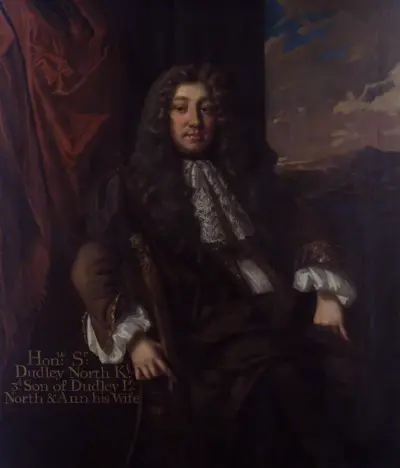
Sir Dudley North was an English merchant, politician and economist, a writer on free trade.
