Rome Quotes
No person shall practice usury at a rate of more than one twelfth.
This was the equivalent of 8.3 percent.
Rome, Roman Law, This law was ratified by the Centuriate Assembly, 449 BC
Sourced by: Eigen's Political and Historical Quotations

Manava Dharma Shastra. Ancient Jewish law prohibited the charging of interest. The early Christian world frowned upon it and morally and legally vacillated from time to time. Islam outlawed interest completely and some orthodox Muslims and Muslim counties loans with interest are illegal. However the ancient Hindus not only allowed interest but felt that it was such an important component of the economy that there were numerous regulations, religions and legal regulating it. This example made 5 percent the maximum allowable interest rate. This text is a part of the Hindu Holy Texts. Hindus believe that Manu was a prophet whose text is revealed or inspired.


Sherman, at the height of the California Gold Rush, took a private assignment for Moffett & Company, establishing and running an assaying, banking and minting company in San Francisco
Such an interest rate was not considered high, much less usurious.

North was none-the-less in favor of allowing interest rates be much higher, but was stating the best argument, believed at the time by most English experts, and many American economists today.


Interest is forbidden in all transaction, both business and personal.


Usury in orthodox Muslim terms means the charging of interest. Modern Islamic societies have developed a variety of methodologies for dealing with the usury prohibition yet functioning in a modern capitalist system. Orthodox Jews also have a Biblical prohibition against loans with interest. Fundamentalist Protestants of some sects also believe that loaning or borrowing money and charging interest is a sin prohibited by God.


There were little controls over usury in his time in India. Villagers often paid 500% or more to borrow money in a necessity like needing critical health care.


He was against paper money. At the time, any bank could issue its own paper money or “banknotes”. However other banks would not redeem the banknotes for the full amount; they would “discount” the note. Usually, the further away the bank was from the original bank, the more discount they took. Interstate commerce was almost impossible. Alexander Hamilton, Jefferson’s nemesis, had a much more modern point of view and fortunately his view prevailed. Paper money could only work if it was issued by a central bank with no discounting by other banks. The paper money had to be “legal tender”.


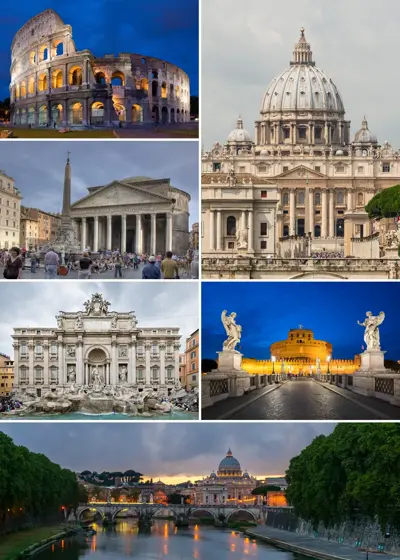
Rome (Italian and Latin: Roma [ˈroːma] (listen)) is the capital city and a special comune of Italy (named Comune di Roma Capitale), as well as the capital of the Lazio region. The city has been a major human settlement for almost three millennia. With 2,860,009 residents in 1,285 km2 (496.1 sq mi), it is also the country's most populated comune. It is the third most populous city in the European Union by population within city limits. It is the centre of the Metropolitan City of Rome, which has a population of 4,355,725 residents, thus making it the most populous metropolitan city in Italy. Its metropolitan area is the third-most populous within Italy. Rome is located in the central-western portion of the Italian Peninsula, within Lazio (Latium), along the shores of the Tiber. Vatican City (the smallest country in the world) is an independent country inside the city boundaries of Rome, the only existing example of a country within a city; for this reason Rome has sometimes been defined as the capital of two states.
