Periyar E. V. Ramasamy Quotes
Money lending is a horrible profession. If we are to call it otherwise it is lawful plundering.
There were little controls over usury in his time in India. Villagers often paid 500% or more to borrow money in a necessity like needing critical health care.
Periyar E. V. Ramasamy, 1879–1973, Indian Dravidian social activist & politician, Founder of Dravidar Kazhagam., Veeramani, Collected Works of Periyar E.V.R., 2005
Sourced by: Eigen's Political and Historical Quotations


Summarizing his conclusions of the Judiciary Committee investigations regarding Wall Street and the bankers' role in the Great Depression:


Sherman, at the height of the California Gold Rush, took a private assignment for Moffett & Company, establishing and running an assaying, banking and minting company in San Francisco
Such an interest rate was not considered high, much less usurious.

Essentially, the Council voted to close all the banks of the day and get rid of all the bankers. Without banking economic development of Christian (Catholic) Europe stagnated and did not thrive until the Borgia’s used their banking prowess to actually attain the Papacy. Ironically, Christians, Jews and Muslims all had banned banking—usury—the charging of interest for borrowed money—as a serious sin. To this day there are orthodox fundamentalists of all three religions who decry modern banking, but the majority of Christians and Jews no longer have any problem with banking, and while the Muslims generally still decry it as a sin, the wealthy Muslims have come up with various fig leaves where they pretend that banking us not usury, and in the modern world, although they are castigated by a mullah or two, the essence of capitalism goes on even in Muslim countries.


Usury in orthodox Muslim terms means the charging of interest. Modern Islamic societies have developed a variety of methodologies for dealing with the usury prohibition yet functioning in a modern capitalist system. Orthodox Jews also have a Biblical prohibition against loans with interest. Fundamentalist Protestants of some sects also believe that loaning or borrowing money and charging interest is a sin prohibited by God.


Most of the Founding Fathers would be scandalized by the banking and finance system we have in modern times. See {615649} for a similar view and {615650} for another quote by Adams regarding banks. Also {630667} for an Engish quote regarding banks. Interestingly, Adams was a very conservative politician and generally supported the establishment, but banks at that time were not thought of as part of the establishment. They had a somewhat unwholesome reputation at best.


He was against paper money. At the time, any bank could issue its own paper money or “banknotes”. However other banks would not redeem the banknotes for the full amount; they would “discount” the note. Usually, the further away the bank was from the original bank, the more discount they took. Interstate commerce was almost impossible. Alexander Hamilton, Jefferson’s nemesis, had a much more modern point of view and fortunately his view prevailed. Paper money could only work if it was issued by a central bank with no discounting by other banks. The paper money had to be “legal tender”.


This was the equivalent of 8.3 percent.
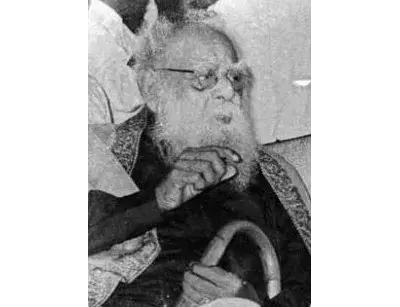
Erode Venkatappa Ramasamy, commonly known as Periyar or Thanthai Periyar, was an Indian social activist and politician who started the Self-Respect Movement and Dravidar Kazhagam. He is known as the 'Father of the Dravidian movement'. He rebelled against Brahminical dominance and gender and caste inequality in Tamil Nadu.
