Benjamin Franklin Quotes
He that trades with Money he hath borrowed at 8 or 10 per Cent cannot hold Market with him that borrows his Money at 6 or 4.
Benjamin Franklin, 1706-1790, Governor of Pennsylvania, Member of the Continental Congress & the Constitutional Convention, Governor of Pennsylvania, President of the Pennsylvania Assembly, U.S. Minister to France, Postmaster General of the American Colonies, A Modest Enquiry into the Nature, and Necessity of a Paper-Currency, 1729
Sourced by: Eigen's Political and Historical Quotations


Sherman, at the height of the California Gold Rush, took a private assignment for Moffett & Company, establishing and running an assaying, banking and minting company in San Francisco
Such an interest rate was not considered high, much less usurious.


North was none-the-less in favor of allowing interest rates be much higher, but was stating the best argument, believed at the time by most English experts, and many American economists today.


Trump as a business man was notorious for setting up business deals where his partners would put up the money. If the enterprise failed the partners were at risk and lost their money while either did not or lost very little. If money was made, however, he took a large share. He not only did this many times but actually admitted it and bragged about his ability to do that. Incredibly enough he even extended this technique to his charity giving. The vast majority of the money he did good things with through his foundation came from other people. There were many years where he gave not a penny to his own foundation, but gave away and took the credit for what was done with other people’s money. The recipients of the foundations grants mostly assumed that Trump was being generous with his own money, and he never disabused them.


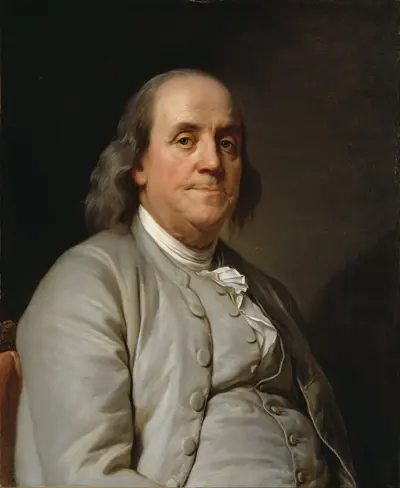
Benjamin Franklin FRS FRSA FRSE was one of the Founding Fathers of the United States. A polymath, he was a leading writer, printer, political philosopher, politician, Freemason, postmaster, scientist, inventor, humorist, civic activist, statesman, and diplomat. As a scientist, he was a major figure in the American Enlightenment and the history of physics for his discoveries and theories regarding electricity. As an inventor, he is known for the lightning rod, bifocals, and the Franklin stove, among other inventions. He founded many civic organizations, including the Library Company, Philadelphia's first fire department, and the University of Pennsylvania.
