Muhammad Quotes
God has permitted buying and selling and forbidden usury …. those who revert to usury are doomed to everlasting hellfire …
Usury in orthodox Muslim terms means the charging of interest. Modern Islamic societies have developed a variety of methodologies for dealing with the usury prohibition yet functioning in a modern capitalist system. Orthodox Jews also have a Biblical prohibition against loans with interest. Fundamentalist Protestants of some sects also believe that loaning or borrowing money and charging interest is a sin prohibited by God.
Muhammad, 571-632, Prophet and Founder of Islam, Koran, Sura, 2:275
Sourced by: Eigen's Political and Historical Quotations

Interest is forbidden in all transaction, both business and personal.

Sherman, at the height of the California Gold Rush, took a private assignment for Moffett & Company, establishing and running an assaying, banking and minting company in San Francisco
Such an interest rate was not considered high, much less usurious.

For many extremists Muslims, this sura calls for the torture or killing of the enemies of Islam. For the more moderate Muslims, the penalty of opposing Islam should be expulsion or banishment. The further modern complication of this sura is the definition of “making war with Allah.” To some extremists, it is writing or publishing anything contrary to their view of Islam; it is occupying any Islamic nation or warring with that nation even though the basis of the war might have nothing to do with religion; it is bringing a Bible into an Islamic nations; it is allowing alcohol to be sold and served; it is opposing their discriminatory customs and laws; it is pressuring them not to stone adulteresses.
the prophet was hostile to all forms of monopoly which in his time for almost always granted through political corruption and favoritism. Before Christians even considered the issue, Islam considered monopolies anti-consumer and contrary to the interests of the Muslim society.
Interest is forbidden in all transaction, both business and personal.


Historically, this is an amazing quotation. It is typical of analyses of Islam in the 21st century when America and most of the non-Muslim world was having great difficulties with Islamic militancy. But this was written at the end of the 19th century, in 1899. Churchill had a grasp of much that it would take other politicians a century to understand. This book was relatively unknown to all but a few historians, military men, and political scholars. (There was a shortened version published in 1902 which did not include this passage and that is the version that Project Gutenberg posted on the Internet. So do not assume that the quotation is wrong if you cannot find it in the version you are reading on the Internet. You need the 1899 longer and more detailed version.

There were little controls over usury in his time in India. Villagers often paid 500% or more to borrow money in a necessity like needing critical health care.

See Daniel Webster for an earlier expression of this notion.

This was the equivalent of 8.3 percent.

North was none-the-less in favor of allowing interest rates be much higher, but was stating the best argument, believed at the time by most English experts, and many American economists today.


The Prophet Muhammad when he was the spiritual and civil leader never called for the death of anyone who insulted him. This is strictly a mania of extremist followers of Islam. However, it should be kept in mind that the Roman Catholic Church in its history murdered people for insulting the Pope or Jesus. It all stems from the Old Testament call for the execution of heretics and blasphemers.
The reason he claimed that Governor Taseer was a blasphemer was that the governor opposed death penalty for saying or writing anything that was heresy or blasphemy as interpreted be fundamentalist Muslims. The Governor knew he was taking a risk. See {620970} .


Over 100 years later a group of Islamic Modernists and Scientists came to a similar conclusion.
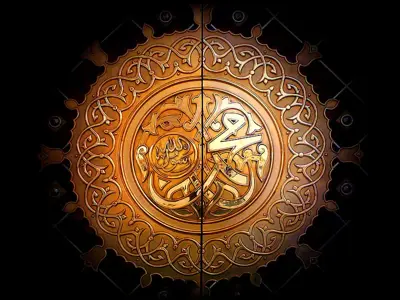
Muhammad was an Arab religious, social, and political leader and the founder of Islam. According to Islamic doctrine, he was a prophet, sent to preach and confirm the monotheistic teachings of Adam, Abraham, Moses, Jesus, and other prophets. He is believed to be the final prophet of God in all the main branches of Islam, though some modern denominations diverge from this belief. Muhammad united Arabia into a single Muslim polity, with the Quran as well as his teachings and practices forming the basis of Islamic religious belief.
