Dudley North Quotes
The Question to be considered is, Whether the Government have reason by a Law, to prohibit the taking more than 4 l. per cent Interest for Money lent, or to leave the Borrower and Lender to make their own Bargains.
North, Dudley. Discourses upon Trade. Tho. Basset, 1691, p. 1.


North was none-the-less in favor of allowing interest rates be much higher, but was stating the best argument, believed at the time by most English experts, and many American economists today.

He was against paper money. At the time, any bank could issue its own paper money or “banknotes”. However other banks would not redeem the banknotes for the full amount; they would “discount” the note. Usually, the further away the bank was from the original bank, the more discount they took. Interstate commerce was almost impossible. Alexander Hamilton, Jefferson’s nemesis, had a much more modern point of view and fortunately his view prevailed. Paper money could only work if it was issued by a central bank with no discounting by other banks. The paper money had to be “legal tender”.


Attempting to defend charges that his bank and others were engaged in monopolistic practices:

This was the equivalent of 8.3 percent.

At the time any private bank could issue their own money. Private sector bankers thought it outrageous that the Congress should consider trampling on their rights to issue money. The solution that was finally adopted some years later was to use the Federal Reserve Board to control the money supply. It is independent of the Congress and the President but members are appointed by the President and confirmed by the Senate. Our system, like no other system, is a compromise where neither the Government or the Private Sector controls the American money supply.


Manava Dharma Shastra. Ancient Jewish law prohibited the charging of interest. The early Christian world frowned upon it and morally and legally vacillated from time to time. Islam outlawed interest completely and some orthodox Muslims and Muslim counties loans with interest are illegal. However the ancient Hindus not only allowed interest but felt that it was such an important component of the economy that there were numerous regulations, religions and legal regulating it. This example made 5 percent the maximum allowable interest rate. This text is a part of the Hindu Holy Texts. Hindus believe that Manu was a prophet whose text is revealed or inspired.

At the time there was no national paper money. Individual banks printed their own and paper money was not accepted or heavily discounted most Americans. Most opposed a tender law that required paper money to be accepted in commerce.


Usury in orthodox Muslim terms means the charging of interest. Modern Islamic societies have developed a variety of methodologies for dealing with the usury prohibition yet functioning in a modern capitalist system. Orthodox Jews also have a Biblical prohibition against loans with interest. Fundamentalist Protestants of some sects also believe that loaning or borrowing money and charging interest is a sin prohibited by God.
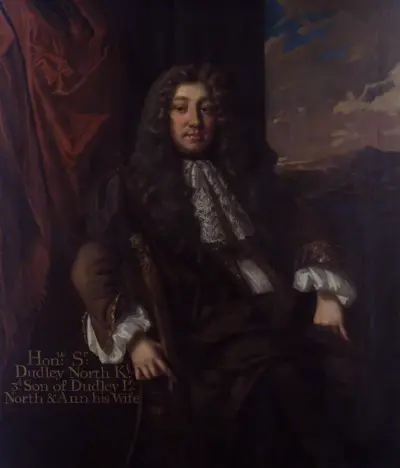
Sir Dudley North was an English merchant, politician and economist, a writer on free trade.
