Charles Francis Adams II Quotes
The laws of trade must be the great teacher.
Charles Francis Adams II, 1835–1915, Historian, Civil War Colonel, Executive & Writer, President of the American Historical Association, Chairman of the Massachusetts Park Commission, President of the Union Pacific Railroad, Grandson of President John Quincy Adams, “The Reign of King Cotton”, The Atlantic Monthly, April 1861
Sourced by: Eigen's Political and Historical Quotations


The issue of free trade verses protectionism has been with us throughout American history with national sentiments going one way and then later the other, only to come back and the cycle has gone on. Floyd was very modern in his economic views, so much so that he, even as a Southern politician, opposed slavery on the grounds that it was economically inefficient and the South would never develop industrially if it had no incentive, as existed in the North and England, to reduce the amount of labor required for economic opportunity. He was right on that point as well.

As absurd as it seems to us today, traders were not very high in the English social order. Business itself was not well respected. English governing councils were devoid of anyone who had trade of business experience. Holland, in contrast, perhaps went to the other extreme in that traders and business men dominated to political structure. The Dutch were much more successful in foreign trade relatively than the English.


There were many Americans and Mexicans who believed that the conquest of all of Mexico was well under way, our having earlier obtained Texas, New Mexico, Colorado, California, and Arizona.


This quotation illustrates two important points. First, that foreign and domestic trade and merchants were very much appreciated at the time and an important component of society that there were special protections for traders and merchants. Second, was the national preemption of jurisdiction and control over business and commerce that would enter and leave the city. On most matters the local authorities would handle things, but intercity and international commerce was historically continuously impaired by individual nobles and other authorities making rules affecting merchants who might come to their town or city. The Crown preempted this authority in the 13th century and the “Commerce Clause” of our Constitution was not an unusual concept and had an extensive legal and economic history.


America’s first political economist. The first American Political Economist was a virulent enemy of free trade.

The industrial revolution was also creating an entirely new form and structure for international economics.

At that period of American History, the Republicans supported high tariffs and protectionism for American companies and it was the Democrats who were the advocates of free trade. Later each of the parties would flip flop their positions and then say that they were advocating their traditional principles.

Statement made during a speech announcing tariffs on Japan who had violated semiconductor trade agreements with the US.


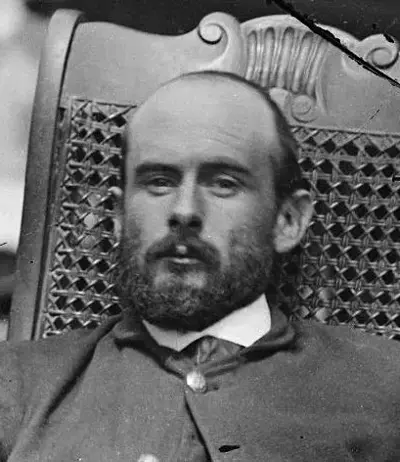
Charles Francis Adams Jr. was an American author and historian. He was a member of the prominent Adams family, and son of Charles Francis Adams Sr. He served as a colonel in the Union Army during the American Civil War. After the war, he was a railroad regulator and executive, an author of historical works, and a member of the Massachusetts Park Commission.
