William Pitt the Younger Quotes
The fund that carried you triumphantly through the last war [with France] … you owe this to America
The profits that England made on the North American Colonies and the Caribbean were very large. 10 years before the American Revolution most sophisticated English politicians realized that and one of the reasons the British fought so hard to keep America from Independence was that money.
William Pitt, 1759-1806, British Prime Minister, (Elected at 24 as the youngest British Prime Minister), Speech, House of Commons, 1766
Sourced by: Eigen's Political and Historical Quotations


At the beginning of the dispute between America and England, the issue was the raising of internal American taxes by Parliament without any American representation in Parliament. The issue escalated and when the British began using force, independence then became the American objective.


Expressing distress that the British were involved in one war after another in the Middle East that she thought never would have occurred if Britain had a foreign policy instead of "Muddling Through". Bell was responsible for setting most of the borders and geographical distributions of peoples in the Middle East, She did the best she could without any strong policy to guide her. A Century later, the Middle Eastern nations were still fighting over those borders, but they remained essentially intact.


This article reached America where the insult proved a patriotic rallying point.
The French had a much different agenda in the new world than the British who wanted to create residential colonies. The French were more interested in trade—not in establishing permanent colonies. The result was that the French were in many ways better trading partners for the Indians than the English. They came without women, intermarried among the Indians and learned the languages; they did not contest for land, and they paid the Indians more for pelts and furs than the English were willing to. At the same time they exacerbated conflicts with the colonists, and encouraged Indian attacks on settlers as that kept competition out. They were not above giving Indians alcohol and encouraging them to rob the furs and/or kill their English competitors. So on two levels, they had to be removed. See the military view of Robert Rogers: {614122}.


The British had, after earlier defeats, finally had great military success in India/Afghanistan on the one hand and China on the other. Note that the objects of the military expeditions were always twofold: First to expand trade and trading opportunities for England. Second to retrieve “honor” that had been lost by earlier military defeats.


3rd Viscount Palmerston. Afghanistan geographically is in a very strategic place, and for centuries major powers have wanted to either control it or have a very friendly government there. The highly independent Afghans are fierce fighters and have repulsed all the major powers who have tried to colonize it. The same independence makes governing the country very difficult, and there has not been a competent government that could control the country at any time in history.

See {636935}for the policy decision that triggered this order.


This was written more than a year before the American Revolution Battles began. It took time to ship the men and supplies to America and the British did not handle that task with much efficiency. See {636926} for another of the King’s statements.

Fox was one of the opposition leaders who were opposed to the heavy handed policies that the British King and Government had used.
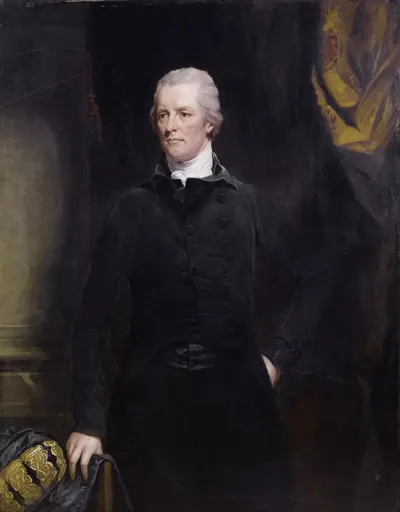
William Pitt the Younger was a prominent British Tory statesman of the late eighteenth and early nineteenth centuries. He became the youngest prime minister of Great Britain in 1783 at the age of 24 and the first prime minister of the United Kingdom of Great Britain and Ireland as of January 1801. He left office in March 1801, but served as prime minister again from 1804 until his death in 1806. He was also Chancellor of the Exchequer for all of his time as prime minister. He is known as "the Younger" to distinguish him from his father, William Pitt, 1st Earl of Chatham, who is customarily referred to as "William Pitt the Elder" (or less commonly, simply "Chatham") and had previously served as prime minister.
