W. Averell Harriman Quotes
Much of the aid we first gave to Russia we took away from what we promised Britain. So in a sense, Britain participated in a very real way in the recovery of Russia.
Harriman, W. Averell. Interview by Richard D. McKinzie. Oral History Interview with W. Averell Harriman, Harry S. Truman Library & Museum, 13 May 1971, p. 5.

The Ottoman Turks had captured Byzantium (Constantinople) in 1453. The Byzantines had received no help from their fellow Christians. The Christian Roman Empire was split in two—a Western (Latin) Empire led by the Roman Catholic Church in Rome, and the Eastern (Greek) Roman Empire led by the Orthodox Church headquartered in Constantinople (Byzantium). The two churches were not only in a theological conflict but violence broke out and the armies of the two religious empires attacked each other now and then. It was assumed that there would be mutual interest in protecting Europe from the Muslim armies. The comparison to the Sultan of Cairo was facetious of course. As a leading Muslim he would never provide any help to the Christians against other Muslims.


Precursor to CIA. WWII had begun in Europe and England was under great pressure as Hitler threatened invasion and the German military had been successful everywhere they tried to invade. FDR had received an intelligence report and advice from our Ambassador to England, Joseph P. Kennedy (JFK’s father). He told the military, the State Department, and the President that England was finished—that they would not be able to stave off the coming German invasion. He predicted that Germany would set up a puppet state. Any help America could supply would not only be wasted but if material, would fall into the hands of the Nazis and be used against us. {610109} The military attaches attached to our Embassy in England generally agreed. However, the President knew that not only did Kennedy dislike Winston Churchill {613151}, but he had been an admirer not only of German Fascism, but Hitler in particular. Kennedy ran around with some of the wealthy, aristocratic English Fascists who were advocating a negotiated surrender to prevent English civilian casualties. So FDR sent his friend, Donavan, to make an independent Assessment. Donovan had served as an officer in WWI and had earned the Medal of Honor. This quotation was the summary of Donovan’s recommendation. Based on Donovan’s report, and other information, the president had gathered and his geopolitical judgment, FDR provided aid to England (Lend Lease) and fired Kennedy, who had disliked Roosevelt before and this turned to hate and became a vendetta for Kennedy thereafter, especially when his oldest son Joe volunteered to serve in the war, that the Ambassador had so viciously opposed, {610121} and then was killed while carrying out a very dangerous volunteer mission. {616651}.

The profits that England made on the North American Colonies and the Caribbean were very large. 10 years before the American Revolution most sophisticated English politicians realized that and one of the reasons the British fought so hard to keep America from Independence was that money.


Although, on sever occasions Mao tried to reach out to the United States, the fact that he was leading a communist movement and Chiang Kai-shek, our recognized ruler of China hated Mao caused his overtures to be rebuffed. American military leaders knew very little about China and our intelligence was almost non-existent. They assumed that he was under the control of Russia and Joseph Stalin when in fact, the Russians wanted to oust Mao for not following Stalin’s communist orthodoxy. They succeeded in firing him as head of the party and replacing him with a committee of more loyal communists. Not only did the US rebuff Mau’s outreach attempts, but American money and military material financed 6 different military campaigns by Chiang to exterminate Mao and his communists.
None succeeded as the vast majority of the peasants supported Mao and his troops and provided support and information in Chiang’s attempts. Some historians believe we “bet on the wrong horse”.

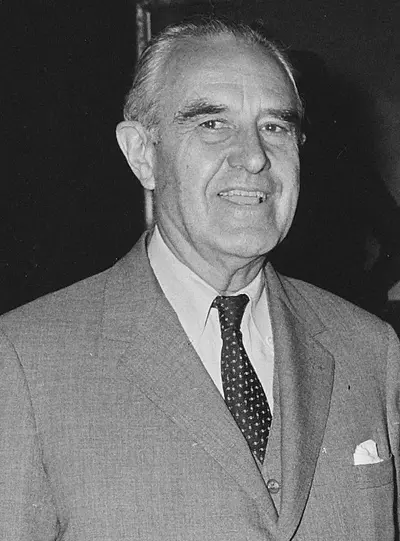
William Averell Harriman, better known as Averell Harriman, was an American Democratic politician, businessman, and diplomat. The son of railroad baron E. H. Harriman, he served as Secretary of Commerce under President Harry S. Truman, and later as the 48th Governor of New York. He was a candidate for the Democratic presidential nomination in 1952 and 1956, as well as a core member of the group of foreign policy elders known as "The Wise Men".
