George C. Wallace Quotes
It seems that other parts of the world ought to be concerned about what we think of them instead of what they think of us. After all, we're feeding most of them, and whenever they start rejecting 25 cents of each dollar of foreign aid money that we send to them, then I'll be concerned about their attitude toward us.
Carter, Dan T. The Politics of Rage: George Wallace, the Origins of the New Conservatism, and the Transformation of American Politics. Simon & Schuster, 1995, p. 345.


Most American policy makers have believed that food should not by used as a weapon on moral and humitarian grounds. Butz was an ultra-conservative who were among the few that were willing to use food to achieve political opbjectives even it it meant starving people in other countries.


He had just returned from a trip abroad.

He was very sensitive to the criticism of China’s human rights record. The Chinese leadership was very proud to their accomplishments of lifting hundreds of millions of people out of poverty and eliminating hunger and starvation, and many foreigners from developed nations were seemingly inattentive to the remarkable economic success in their focus on human rights shortcomings.

The two were cousins. Wilhelm was a very dominant personality and his cousin quite weak. This quotation shows the egomaniacal view of the German Kaiser. The letters were secret but after the execution of the Czar, the Russians released the letters to show the dominant and warlike history of Germany under the Kaiser who was furious that the Russians had made such personal and secret letters public.


Passman’s committee controlled foreign aid appropriations and there was considerable political hostility to the U. S. aid program as it had been implemented by Kennedy and Eisenhower. Johnson was concerned that if he did not maintain the same level of foreign aid that JFK had, the change would be misinterpreted by most countries who did not realize that this was a domestic political squabble.


India had just recently gained its independence from Britain.

The “gentlemen: were 4 ultraconservative members of Congress who objected to our sending surplus food to India when they had a terrible famine. India was “non-aligned” in the Cold War and the Congressmen did not want to send them food unless they allied with us against the Russians. India was a fledgling democracy at the time and was vulnerable to bad weather and crop failure. Once, our food helped them get on their feet, they improved their agricultural production and today they have sufficient food stored so that they can survive major agricultural crises.

Although, on sever occasions Mao tried to reach out to the United States, the fact that he was leading a communist movement and Chiang Kai-shek, our recognized ruler of China hated Mao caused his overtures to be rebuffed. American military leaders knew very little about China and our intelligence was almost non-existent. They assumed that he was under the control of Russia and Joseph Stalin when in fact, the Russians wanted to oust Mao for not following Stalin’s communist orthodoxy. They succeeded in firing him as head of the party and replacing him with a committee of more loyal communists. Not only did the US rebuff Mau’s outreach attempts, but American money and military material financed 6 different military campaigns by Chiang to exterminate Mao and his communists.
None succeeded as the vast majority of the peasants supported Mao and his troops and provided support and information in Chiang’s attempts. Some historians believe we “bet on the wrong horse”.


China, which had been one of the strongest and most modern nations in the world for 1000 years had lapsed into decay and though a huge nation, rich in resources, with more people than any other had been eclipsed by Japan, America and Europe. Cixi was determined to remedy that, and to a great extent started China on the road to modernization which would take over 100 years more.


There is one condition for us to have healthy relations with the United States. It's called respect.
This is an old and critical concept in American relations with the rest of the hemisphere which Simon Bolivar used to refer to as “respecto.” Americans tend to be relatively unconcerned by what other nations think of America, and since the US has been so successful, it has developed a strong national ego. Other nations, not so successful in modern times, tend to place a great deal of importance on the notion of respect. It is a major factor in most of the world.


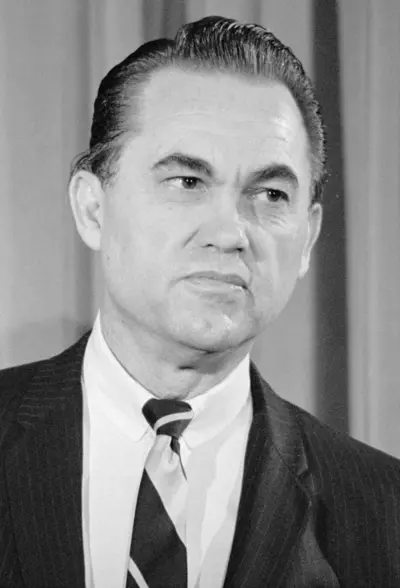
George Corley Wallace Jr. was a politician who served as the 45th governor of Alabama for four terms. A member of the Democratic Party, he is best remembered for his staunch segregationist and populist views. During his tenure, he promoted "industrial development, low taxes, and trade schools". Wallace sought the United States presidency as a Democrat three times, and once as an American Independent Party candidate, unsuccessfully each time. Wallace opposed desegregation and supported the policies of "Jim Crow" during the Civil Rights Movement, declaring in his 1963 inaugural address that he stood for "segregation now, segregation tomorrow, segregation forever".
