Saionji Kimmochi Quotes
Japan had become a general object of distrust and misunderstanding; a fact not only deeply injurious to Japan, but very unfortunate for foreign nations, whose policy in the Far East is influenced thereby. It was the duty of the nation to inspire a spirit of confidence and good-will among its friends abroad
He had just returned from a trip abroad.
Kimmochi Saionji, 1849-1940, Prime Minister of Japan & President of the House of Peers, September 1919
Sourced by: Eigen's Political and Historical Quotations

There is one condition for us to have healthy relations with the United States. It's called respect.
This is an old and critical concept in American relations with the rest of the hemisphere which Simon Bolivar used to refer to as “respecto.” Americans tend to be relatively unconcerned by what other nations think of America, and since the US has been so successful, it has developed a strong national ego. Other nations, not so successful in modern times, tend to place a great deal of importance on the notion of respect. It is a major factor in most of the world.


Some historians believe that with this quotation, Japan perceived that it had a “green light” from America to dominate Asia. It was further reinforced when Roosevelt later refused to object or intervene when Japan seized control of Korea.


Inscribed in the John Adams Building of the Library of Congress. On this subject Jefferson was in agreement with George Washington {37176} and his political opponent, John Adams {592705}.


The two were cousins. Wilhelm was a very dominant personality and his cousin quite weak. This quotation shows the tyrannical view of the German Kaiser. The letters were secret but after the execution of the Czar, the Russians released the letters to show the dominant and warlike history of Germany under the Kaiser who was furious that the Russians had made such personal and secret letters public. Russia was involved with the Russo-Japanese war. Both the Russian and German aristocracies had designs on dominating Asia for the memories of the Asian invasions of Europe were still alive.


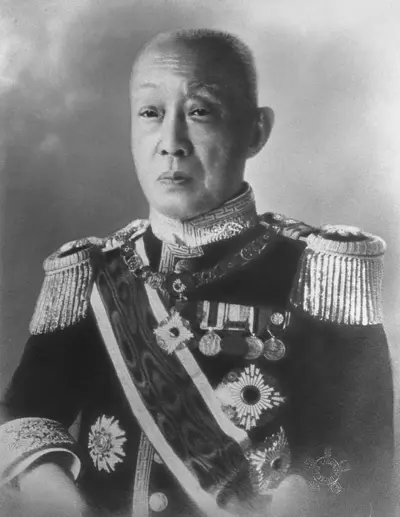
Prince Saionji Kinmochi was a Japanese politician, statesman and twice Prime Minister of Japan. He was elevated from marquis to prince in 1920. As the last surviving member of Japan's genrō, he was the most influential voice in Japanese politics from the mid-1920s to the early 1930s.
