HENRY JOHN TEMPLE
(Henry John Temple, 3rd Viscount Palmerston)

3rd Viscount Palmerston. This historical quotations illustrates the worst of the British Empire. British merchants were making large profits shipping opium to China and selling it there. Drug addiction became a major problem and some local Chinese Authorities passed laws banning the importing and selling of opium. However, the English merchant ship captains paid no attention to these laws claiming their rights as Englishmen to free trade. The Chinese finally seized a number of shipments of opium and burned them. The British then appointed Captain Elliot to lead a squadron of ships to China, arrange for payment in compensation for the value of the seized opium and to open up the opium trade, by force if necessary. The Chinese position was not unreasonable and Captain Elliot was not able to secure the concessions the English government wanted without starting a small war with the loss of many lives. Temple, who was the Foreign Minister at this time, fired Elliot and replaced him with someone who was less concerned about problems of drug addiction and the Chinese. Thus began the First Opium War. Note that the then British view of equity was that if they had to send an expedition of ships and soldiers to force the Chinese to allow the English to sell opium, then part of the terms must be that the Chinese pay the costs for the British ships and soldiers who invaded their country and forced them to keep poisoning their own people. See {621319} for Captain Elliot’s view.
3rd Viscount Palmerston. Lajos Kossuth was the Hungarian leader of anti-monarchists who were agitating for a Parliament. While many English people sympathized with Kossuth, his government, which had good relations with England, did not want any of the other European Governments to officially meet with him. It was considered insulting to a government if a friendly government met officially with a politician who was not approved by his own government. Palmerston, as Temple was referred to, wanted to show English sympathy with the reforms advocated by Kossuth. He was then the Foreign Minister and wanted to invite Kossuth to the Foreign Ministry. However the Cabinet had a meeting and voted against the idea which would not only inflame the Hungarian government, but would outrage all the other countries in Europe for this diplomatic insult. Palmerston then decided that he would meet with Kossuth in his private residence. When the Prime Minister discovered this plan, he sent a note by messenger telling Palmerston that he was the Foreign Minister and inviting Kossuth to his home could not be seen as an official action. Palmerston has his own political base and had enough supporters in Parliament that if he would be fired, he could bring down the coalition government. So in effect he told his Prime Minister off and dared Russell to fire Palmerston. Then he went ahead with the meeting. The cabinet was upset, Queen Victoria was outraged (she never cared for Palmerson as a Foreign Minister), the Newspapers had a field day, and all the European counties complained vehemently to the Queen and the Prime Minister. But Russell didn’t dare fire Palmerston at that point. However, with Queen Victoria’s shrewd political maneuvering and Russell coalescing support, he was able to demote Palmerson to Home Secretary and assume the Foreign Ministry himself in 1952. However, Palmerston had the final winning hand, when 3 years later, he was elected Prime Minister and he and the Queen had to make a rapprochement.
A problem often exists when a citizen of one country is in another and is accused of wrongdoing. In many cases the local country’s laws. Constitutional guarantees, and corrupt or incompetent judiciary are of a very low standard. How active should a nation be in protecting its citizens in foreign countries to be sure that they are treated fairly and with justice. This is a matter of foreign policy and at the time, some British politicians wanted the government to avoid interfering in individual cases as the consequences were often bad relations and occasionally war to protect citizens. Temple would have none of it, and the last sentence of this quotation is his famous statement of the role of England towards their citizens wherever they might be. This problem only exists for powerful nations as weak ones are in no position to protect their citizens abroad. The United States has never been as strong as Ancient Rome or England in the protection of its citizens abroad, but has not been entirely disinterested either. It depends on the facts of the individual case, the foreign policy situation with the country involved and the particular government in power.
3rd Viscount Palmerston
3rd Viscount Palmerston. France has had, ever since their bloody revolution, factions that were for revolution and factions for stability have both always existed.
3rd Viscount Palmerston. Afghanistan geographically is in a very strategic place, and for centuries major powers have wanted to either control it or have a very friendly government there. The highly independent Afghans are fierce fighters and have repulsed all the major powers who have tried to colonize it. The same independence makes governing the country very difficult, and there has not been a competent government that could control the country at any time in history.
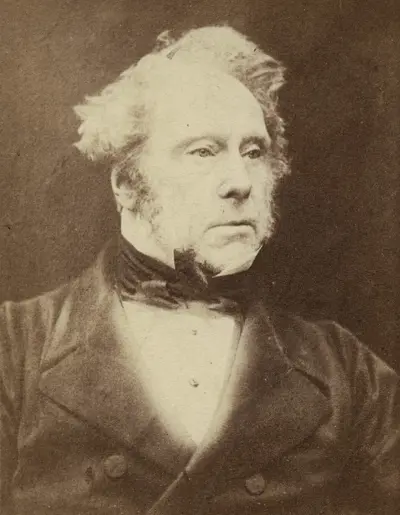
Henry John Temple, 3rd Viscount Palmerston, KG, GCB, PC, FRS was a British statesman, who was twice Prime Minister of the United Kingdom in the mid-19th century. Palmerston dominated British foreign policy during the period 1830 to 1865, when Britain stood at the height of its imperial power. He held office almost continuously from 1807 until his death in 1865. He began his parliamentary career as a Tory, defected to the Whigs in 1830, and became the first prime minister from the newly-formed Liberal Party in 1859. He was highly popular with the British public. David Brown argues "an important part of Palmerston's appeal lay in his dynamism and vigour."
