Henry John Temple Quotes
The country is told that British subjects in foreign lands are entitled — for that is the meaning of the resolution — to nothing but the protection of the laws and the tribunals of the land in which they happen to reside. The country is told that British subjects abroad must not look to their own country for protection, but must trust to that indifferent justice which they may happen to receive at the hands of the Government and tribunals of the country in which they may be…. a British subject, in whatever land he may be, shall feel confident that the watchful eye and the strong arm of England, will protect him against injustice and wrong.
A problem often exists when a citizen of one country is in another and is accused of wrongdoing. In many cases the local country’s laws. Constitutional guarantees, and corrupt or incompetent judiciary are of a very low standard. How active should a nation be in protecting its citizens in foreign countries to be sure that they are treated fairly and with justice. This is a matter of foreign policy and at the time, some British politicians wanted the government to avoid interfering in individual cases as the consequences were often bad relations and occasionally war to protect citizens. Temple would have none of it, and the last sentence of this quotation is his famous statement of the role of England towards their citizens wherever they might be. This problem only exists for powerful nations as weak ones are in no position to protect their citizens abroad. The United States has never been as strong as Ancient Rome or England in the protection of its citizens abroad, but has not been entirely disinterested either. It depends on the facts of the individual case, the foreign policy situation with the country involved and the particular government in power.
Henry John Temple, 3rd Viscount Palmerston, British Prime Minister, Speech in Parliament, June 25, 1850
Sourced by: Eigen's Political and Historical Quotations


The British Government had offered a £20,000 prize for the first person who developed a practical method of determining longitude at sea. Most of the university, military and religious scientists of the day worked on astronomical instrument approaches but Harrison, a relatively unknown clockmaker with no social or scientific credentials, came up with an incredibly accurate clock that would function at sea and immediately calculate the longitude. The scientific establishment refused to certify Harrison for the price even after the British Navy had determined that his method worked. At the urging of the King, Parliament voted him the money.


He was a Protestant liberal and opposed to the English rule of Ireland and the discrimination against the Catholics. To make an example to inhibit Irish protestants from joining the Society of United Irishmen, he was accused of giving an oath to a British Soldier that he would support Irish independence. This had been made a capital crime shortly before. Actually, it was another member of the Society who administered the oath, but the prosecutor arranged for perjured testimony to convict the more prominent Orr. His execution was remembered by liberal Catholics and Protestants alike and in the rebellion the following year the rebel battle cry was “Remember Orr”.


France was coming under great criticism from the rest of Europe for the bloodbath of executions that the Revolution had become. Many French thought that perhaps they were executing too many people. Saint-Just urged them to hold the course and they did.

Although English, Cobett spent time in America and published a newspaper, The Porcupine Gazette, in Philadelphia. We was very conservative but on the issue of slavery his resembled a liberal point of view. He never used sugar, coffee, or rum because slave labor produced them. However, he advocated legally enslaving lazy people, blacks and whites, who would not work.


The professor did not agree with these reasons and took the position that England was foolish in their use of military force. However, in America we rarely hear the English side of the dispute that led to war between England and her American colonies.

See the related quote for the full quote in context.

Many believe that this was one of his greatest quotations. He made this statement when government itself was under attack and the nation was as polarized as any living could remember with President Trump alternately attacking the administration of other presidents and extolling his own while the majority of Americans were not favorable about him and his attacks on others and his repeated falsehoods.


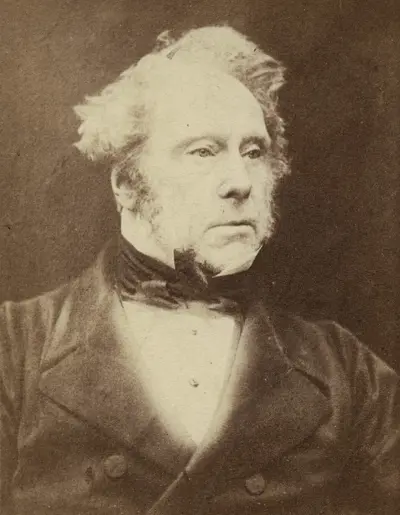
Henry John Temple, 3rd Viscount Palmerston, KG, GCB, PC, FRS was a British statesman, who was twice Prime Minister of the United Kingdom in the mid-19th century. Palmerston dominated British foreign policy during the period 1830 to 1865, when Britain stood at the height of its imperial power. He held office almost continuously from 1807 until his death in 1865. He began his parliamentary career as a Tory, defected to the Whigs in 1830, and became the first prime minister from the newly-formed Liberal Party in 1859. He was highly popular with the British public. David Brown argues "an important part of Palmerston's appeal lay in his dynamism and vigour."
