William Cobbett Quotes
Every man, however slenderly provided with common sense must perceive that slavery was iniquitous and attrocious ... repugnant to the laws of nature and the principles of morality and religion, and militates against the very intentions of society, and the happiness of the human race.
Although English, Cobett spent time in America and published a newspaper, The Porcupine Gazette, in Philadelphia. We was very conservative but on the issue of slavery his resembled a liberal point of view. He never used sugar, coffee, or rum because slave labor produced them. However, he advocated legally enslaving lazy people, blacks and whites, who would not work.
William Cobbett, 1763-1835, British Journalist & Editor, Member of Parliament, Philadelphia General Advertiser, August 8, 1794
Sourced by: Eigen's Political and Historical Quotations

This moral statement from a New jersey Quaker abolitionist is not particularly noteworthy, However what makes this quote important is that Woolman traveled throughout the South preaching this as his main theme. At that time — before the American Revolution — he did so and was not attacked or intimidated; he was mostly ignored by the Southern authorities. At the time, the South was very confident of its ability to continue slavery. Years later, when the abolition movement grew larger and stronger, a Northern Quaker Preacher doing this not not escape with his life.


1st Earl of Mansfield


Brown was the richest man in Rhode Island and made much of his money in the slave trade. This quotation shows that slavery was not completely a North verses South split. Northerners like Brown for whose family Brown University was named, was as virulent supporter of slavery as the most ardent Southerner.

As an entertainer she had toured much of the world and seen American slavery and that of some other nations. She became a staunch abolitionist and like entertainers in the 20th and 21st centuries she used her celebrity to give anti-slavery lectures and perform for audiences where she donated the proceeds of the event to the abolition cause. She is a particularly interesting political figure in that she seems to be one of the first entertainers to perform for a social cause and become an activist.


This quotation so impressed Thomas Jefferson that he wrote it in his Commonplace Book.


It was then the practice of some men to engage in an attempted moral justification of slavery, including, in many cases, resorting to Biblical scripture and principles to argue that slavery was the will of God.


For a similar application of the law to all see the Massachusetts Body of Liberties over a century earlier.

The issue of slavery which had been suppressed in Congress for the first decades of the nation broke out when Missouri statehood was considered. By previous agreement, slavery was not even discussed in Congress but the time period elapsed. Tallmadge not only proposed that no more slaves could come into Missouri {613176} but most shocking to the Southerners was that every person born in the new state would be free at the age of 25. In a generation, there would be no more slavery in Missouri and there would be no economic compensation for slave owners at all. The House of Representatives accepted the amendment, but it failed in the Senate. At that time, Senators were not elected by voters but were appointed by the state legislators and the Southern slave states had a disproportionate share of the senate from a population point of view. But what this quotation shows clearly that a majority of the country in 1819 were opposed to slavery and were willing to end it without compensation.


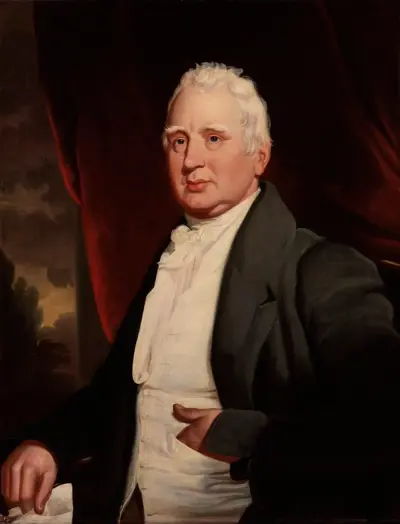
William Cobbett was an English pamphleteer, journalist, Member of Parliament and farmer born in Farnham, Surrey, one of a popular agrarian faction seeking to reform Parliament, abolish "rotten boroughs", restrain wanton foreign activity and increase wages, to promote domestic peace and ease poverty among farm labourers and smallholders. He backed lower taxes, saving, reversing enclosures of commons and resisting the gold standard of 1821. He sought an end to borough-mongers, sinecurists and "tax-eaters" (overpaid and corrupt bureaucrats, public servants and stockbrokers), and dismissed British Jews in a typecast by the same token. Early in life he was a soldier and devotee of king and country, but later pushed for a radicalism that helped to produce the Reform Act 1832 and gain him one of two seats in Parliament for the newly enfranchised borough of Oldham. He urged Catholic emancipation. He saw British agriculture and other economic output geographically. His polemics cover subjects from political reform to religion. His best known book is Rural Rides (1830, still in print). He argued against Malthusianism that economic betterment could support global population growth.
