John Brown Quotes
Slavery is right, just, and lawful and consequently practiced every day.
Brown was the richest man in Rhode Island and made much of his money in the slave trade. This quotation shows that slavery was not completely a North verses South split. Northerners like Brown for whose family Brown University was named, was as virulent supporter of slavery as the most ardent Southerner.
John Brown, 1736–1803), U. S. Congressman (Federalist, RI), Member of the Continental Congress, Merchant & Shipping Magnate & Slave Trader, Quoted in Charles Rappyeye, Sons of Providence, 2006
Sourced by: Eigen's Political and Historical Quotations

His prediction would come true 72 years later. He was a slave trader and a strong supporter of the institution. See {624060}. However unlike most slave supporting Southerners, he came from one of the richest families of New England. His own brother Moses Brown was an ardent abolitionist and John was able to see the arguments and forces lined up against slavery. He saw that abolitionists as the trouble makers because they were trying to change the status quo. Having much experience with Southerners and selling them many slaves, he realized early how the South was totally dependent on slavery for its economic and social way of life. Few Americans had that broad a perspective.


Southern secession and the Civil War This is one of the major quotations with which historians rebut the revisionist view that the Civil War was about States’ Rights or other economic factors.


The Republican Party condemned polygamy and slavery in its party platform of 1856


Although English, Cobett spent time in America and published a newspaper, The Porcupine Gazette, in Philadelphia. We was very conservative but on the issue of slavery his resembled a liberal point of view. He never used sugar, coffee, or rum because slave labor produced them. However, he advocated legally enslaving lazy people, blacks and whites, who would not work.

Duchess of Bedford. In 1853, during a visit to England, Harriet Beecher Stowe was presented with a petition containing the signatures of over a half million British women asking for an end to American Slavery. It was in 26 bound volumes. The backing of the prestigious Duchess and so many other English women had a profound effect on American Women and the growing strength of the Abolition movement.

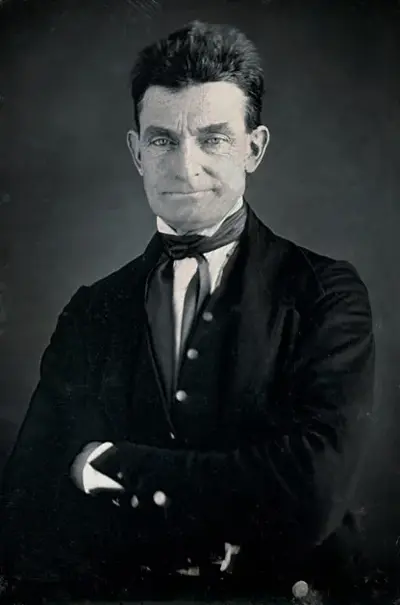
- Born: May 9, 1800
- Died: December 2, 1859
- Nationality:
- Profession: Tanner; Cattle, Horse, Sheep Breeder Trader; Farmer
John H. Brown was an American abolitionist leader. Brown felt that violence was necessary to end American slavery, as years of speeches, sermons, petitions, and moral persuasion had failed.
