John Wesley Quotes
If this trade --- slavery --- admits of a moral or a rational justification, every crime, even the most atrocious, may be justified.
It was then the practice of some men to engage in an attempted moral justification of slavery, including, in many cases, resorting to Biblical scripture and principles to argue that slavery was the will of God.
John Wesley, 1703-1791, English Cleric and Founder of Methodism, Thoughts upon Slavery, 1774
Sourced by: Eigen's Political and Historical Quotations

His voyage took him to several slave countries where his anti-slavery views were challenged by locals.

Although English, Cobett spent time in America and published a newspaper, The Porcupine Gazette, in Philadelphia. We was very conservative but on the issue of slavery his resembled a liberal point of view. He never used sugar, coffee, or rum because slave labor produced them. However, he advocated legally enslaving lazy people, blacks and whites, who would not work.

This moral statement from a New jersey Quaker abolitionist is not particularly noteworthy, However what makes this quote important is that Woolman traveled throughout the South preaching this as his main theme. At that time — before the American Revolution — he did so and was not attacked or intimidated; he was mostly ignored by the Southern authorities. At the time, the South was very confident of its ability to continue slavery. Years later, when the abolition movement grew larger and stronger, a Northern Quaker Preacher doing this not not escape with his life.


Brown was the richest man in Rhode Island and made much of his money in the slave trade. This quotation shows that slavery was not completely a North verses South split. Northerners like Brown for whose family Brown University was named, was as virulent supporter of slavery as the most ardent Southerner.

The language was removed in the negotiations that followed Jefferson's draft.


Duchess of Bedford. In 1853, during a visit to England, Harriet Beecher Stowe was presented with a petition containing the signatures of over a half million British women asking for an end to American Slavery. It was in 26 bound volumes. The backing of the prestigious Duchess and so many other English women had a profound effect on American Women and the growing strength of the Abolition movement.
Pernambuco is a state of Brazil. His voyage took him to several slave countries.

Jefferson was one of the early observers that the the institution of slavery corrupted and depraved the whites.
He was also himself a ship owner in the slave trade and he was the brother of the leading Rhode Island abolitionist, Moses Brown. See {585793}. Brown became the first American, prosecuted in federal court for illegal slave trading –-- a prosecution brought, in part, by his own brother. He was, however, acquitted.


As an entertainer she had toured much of the world and seen American slavery and that of some other nations. She became a staunch abolitionist and like entertainers in the 20th and 21st centuries she used her celebrity to give anti-slavery lectures and perform for audiences where she donated the proceeds of the event to the abolition cause. She is a particularly interesting political figure in that she seems to be one of the first entertainers to perform for a social cause and become an activist.
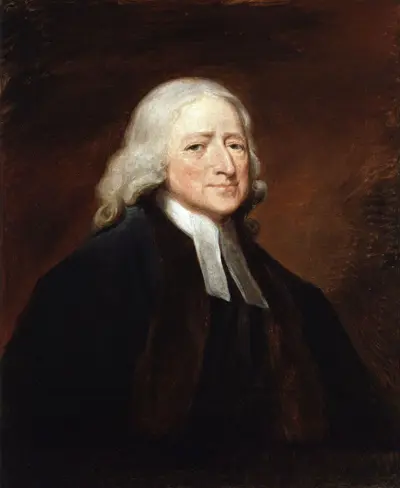
John Wesley was an English cleric, theologian, and evangelist, who was a leader of a revival movement within the Church of England known as Methodism. The societies he founded became the dominant form of the independent Methodist movement that continues to this day.
