John Wesley Quotes
Can law, human law, change the nature of things? Can it turn darkness into light, or evil into good? By no means. Notwithstanding ten thousand laws, right is right, and wrong is wrong still. There must still remain an essential difference between justice and injustice, cruelty and mercy. … Who can reconcile this treatment of the Negroes, first and last, with either mercy or justice?
John Wesley, 1703-1791, English Cleric and Founder of Methodism, Thoughts Upon Slavery, 1774
Sourced by: Eigen's Political and Historical Quotations


Although Wedgwood was a business man and ceramic manufacturer, he was a staunch abolitionist. He made these medallions by the thousands and gave them to all who would receive them. The text became the motto of the anti-slavery society. It was one of the first examples of a logo – a symbol for a political cause being very effective.

The issue of slavery which had been suppressed in Congress for the first decades of the nation broke out when Missouri statehood was considered. By previous agreement, slavery was not even discussed in Congress but the time period elapsed. Tallmadge not only proposed that no more slaves could come into Missouri {613176} but most shocking to the Southerners was that every person born in the new state would be free at the age of 25. In a generation, there would be no more slavery in Missouri and there would be no economic compensation for slave owners at all. The House of Representatives accepted the amendment, but it failed in the Senate. At that time, Senators were not elected by voters but were appointed by the state legislators and the Southern slave states had a disproportionate share of the senate from a population point of view. But what this quotation shows clearly that a majority of the country in 1819 were opposed to slavery and were willing to end it without compensation.


Most Northerners knew little about Southern Slavery and its abject cruelty. The institution was so horrendous that most Northerners tended to think of them as aberrant, unusual occurrences. Speakers fanned out throughout the North disclosing the reality.

She was one of the first prominent white southerners to denounce racial segregation.

Although English, Cobett spent time in America and published a newspaper, The Porcupine Gazette, in Philadelphia. We was very conservative but on the issue of slavery his resembled a liberal point of view. He never used sugar, coffee, or rum because slave labor produced them. However, he advocated legally enslaving lazy people, blacks and whites, who would not work.

As an entertainer she had toured much of the world and seen American slavery and that of some other nations. She became a staunch abolitionist and like entertainers in the 20th and 21st centuries she used her celebrity to give anti-slavery lectures and perform for audiences where she donated the proceeds of the event to the abolition cause. She is a particularly interesting political figure in that she seems to be one of the first entertainers to perform for a social cause and become an activist.


1st Earl of Mansfield


The editorial was in response to the pro-slavery speeches in the Senate of John C. Calhoun.
As a British Loyalist officer, he and his men were dispatched to Savannah, Georgia. There he saw the Southern version of slavery for the first time and was shocked at the cruelty. At the end of the Revolutionary war, he and many other loyalists fled to Canada and began his political career, then representing Britain in the Caribbean. See also {591379}.


Supreme Court Chief Justice Roger B. Taney, 1777-1864, had written the infamous Dred Scott decision requiring free states to return escaped slaves from the South. This decision widened the gap between North and South and made the Civil War almost inevitable. See {584921}.


This was the first of the famous Lincoln-Douglas Debates. The men were contesting for the U. S. Senate. Douglas won the election.


This was part of his presentation to Northern influential business men showing them what he claimed was the New South. He was particularly complimentary about the negro Christian viewpoint that inhibited revenge or retaliation for their terrible treatment. The favorable lines about Negroes were well received by Northerners. However, they were mostly unaware of his racist views he expressed when in the South. See Quotation 643649.
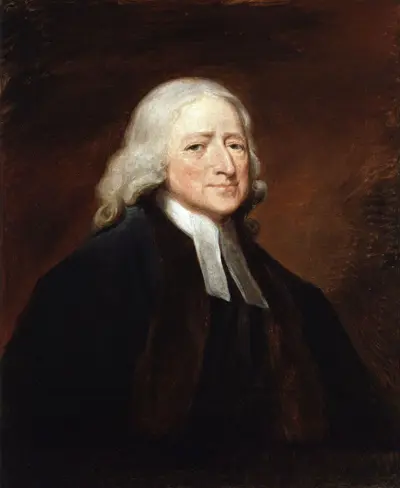
John Wesley was an English cleric, theologian, and evangelist, who was a leader of a revival movement within the Church of England known as Methodism. The societies he founded became the dominant form of the independent Methodist movement that continues to this day.
