W. E. B. Du Bois Quotes
Daily the Negro is coming more and more to look upon law and justice, not as protecting safeguards, but as sources of humiliation and oppression. The laws are made by men who have little interest in him; they are executed by men who have absolutely no motive for treating the black people with courtesy and consideration; and, finally, the accused law-breaker is tried, not by his peers, but too often by men who would rather punish ten innocent Negroes than let one guilty one escape.
W. E. B. Du Bois, 1868-1963, Educator & Author, Co-Founder of the NAACP, The Souls of Black Folk, 1903
Sourced by: Eigen's Political and Historical Quotations


Johnson was then Vice President.


Blacks were not allowed to testify in court in the Southern States. The reasons why has never been clear. Many slave keeping societies like Ancient Rome not only allowed slaves to testify in the courts, but required them to do so in many circumstances even when their owners were opposed.

Booth was the younger son of a very prominent Northern family of actors. His older brother was considered the greatest American actor, and the rest of the family were abolitionists and vehement Union supporters. They found young John’s views reprehensible.


In the 1940’s equality and Civil Rights was a good wedge issue for Republicans because the most racist members of Congress were Democrats even though there were many Democrats who advocated strong civil rights. In 1964, there was a party realignment after the Congress passed the Civil Rights Act. After that the most racist members of Congress and the political established switched to the Republican Party and this caused the Republicans to publicly soft pedal civil rights issues. It now became a wedge issue for the democrats, and very few national Republican figures would make such a statement as it would be misinterpreted by the racial right wing of the party.


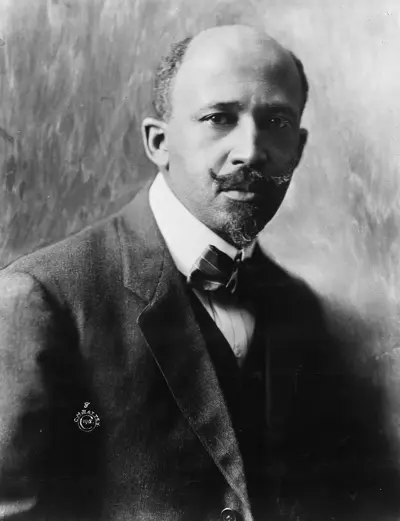
William Edward Burghardt Du Bois was an American sociologist, socialist, historian, and Pan-Africanist civil rights activist. Born in Great Barrington, Massachusetts, Du Bois grew up in a relatively tolerant and integrated community. After completing graduate work at the Friedrich Wilhelm University (in Berlin, Germany) and Harvard University, where he was the first African American to earn a doctorate, he became a professor of history, sociology, and economics at Atlanta University. Du Bois was one of the founders of the National Association for the Advancement of Colored People (NAACP) in 1909.
