Martin Luther King Jr. Quotes
To attempt to explain a system like segregation to a 6 year child is a very difficult thing.
Martin Luther King Jr., 1929-1968, Clergyman & Civil Rights Leader, Nobel Peace Laureate, PBS, The March, August 30, 2013
Sourced by: Eigen's Political and Historical Quotations

In that year he resigned from the War Department in protest of the discrimination and racism in the armed forces.


Qutb was studying at Greeley College and with some Egyptian friends want to a movie theater. Greeley, even though not in the South, practiced racial discrimination in many of their public accommodations and the Civil Rights Law would not be passed for another 15 years or so. The ticked clerk at first would not sell tickets to the dark skinned Egyptians and when one protested, the owner was called. He ruled that as long as they were not American Blacks, they could enter. But Qutb refused.


This quotation provides us with several important insights in American history. First, the Director of the FBI was an inveterate racist. Second, he felt no inhibition on sharing this discriminatory view with the Media. Third, he is yet another source for the fact that Blacks did not have a decent opportunity to get an education. There were some Southerners who maintained that they did have such an opportunity in the “Separate but Equal” segregated schools systems of the South. Hoover was not the only racist in the upper ranks of the FBI; most of the leadership was prejudiced. See {620621} and {74219} .

This was actually a very courageous statement for an American politician running for national office. As a result of the pressure of this statement President Franklin Roosevelt allowed Black enlistment in the Army Air Forces.

Forrest went on to be the first National Leader of the Terrorist Organzation.


He was not only an atheist himself, but he was a major opponent of organized religion which he regarded as one or the major initiators and drivers of slavery, segregation and discrimination. For this reason he was critical of Martin Luther King—{583307}. His irreligiosity had always prevented his gaining much support from his fellow African Americans even though a great writer like H. L. Menken considered Schuyler, "the best writer in America".
At the time, racial discrimination was so rampant in America that when one of the units of Pepsi Cola, under the leadership of Walter Mack, hired Emmons to sell to Black communities, the Black residents of Northern communities were so unused to seeing Blacks in a “white collar” job, that they were treated as celebrities. Emmons and a few other black salesmen had incredible results yet despite that, the practice did not grow at the time as there were too many white executives who were so prejudiced that the practice was not increased after Mack retired. This short quotation paints a good picture of the nature of racial job discrimination in the North prior to WWII.

Billy Sunday was the most famous preacher of the day. Unlike the vast majority of white preachers, he not only preached to black audiences but exuded an atmosphere of friendliness and comfort around Blacks that amazed most. Most Black leaders thought Sunday was very good for race relations, but there were some clergy like Grimke who criticized him. Sunday was castigated by many racist whites for preaching to Blacks, but he did not go as far as to condemn or preach against racism and the discrimination of the day and he would not preach to an integrated audience. Grimke, in contrast, preached to an integrated congregation and was one of the few white clergy who did in the South. (Washington DC was then a southern, segregated city.) See {585415} for another critique of Sunday.


In the 1940’s equality and Civil Rights was a good wedge issue for Republicans because the most racist members of Congress were Democrats even though there were many Democrats who advocated strong civil rights. In 1964, there was a party realignment after the Congress passed the Civil Rights Act. After that the most racist members of Congress and the political established switched to the Republican Party and this caused the Republicans to publicly soft pedal civil rights issues. It now became a wedge issue for the democrats, and very few national Republican figures would make such a statement as it would be misinterpreted by the racial right wing of the party.

Johnson was the first Black man who won the heavyweight championship at a time when racism in America was rampant. Many whites referred to Jeffries as “The Great White Hope” who would take the champion back for the whites. He didn’t and was beaten badly.


The letter was written in the supposed style of a Black after Emancipation and includes most of the ugly false stereotypes of the worst of the racists of the present and the slaveowners of past times. Williams stated that he was not a racist and was trying to make a point about freedom required risk and responsibility. However, the effort was interpreted by many people, Black and white, to be insulting and a put down of African Americans. At the same time, although most of the Tea Party members were not racists, most of the racists in America were supporters of the Tea Party. Those people interpreted the quotation as "telling it like it is" about Blacks who do not want the responsiblities and risks of freedom and are not yet developed sufficiently to be equal citizens in a democracy.

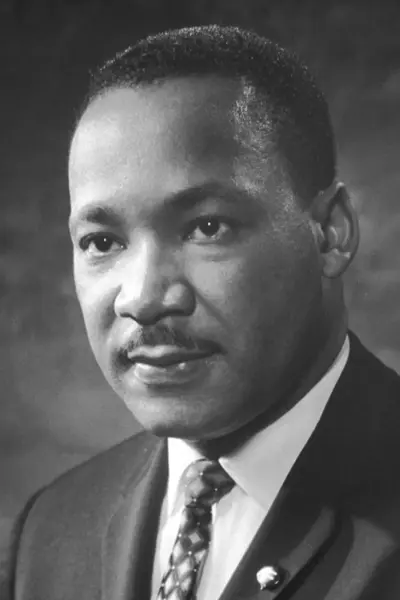
Martin Luther King Jr. was an African American Baptist minister and activist who became the most visible spokesperson and leader in the American civil rights movement from 1955 until his assassination in 1968. King advanced civil rights through nonviolence and civil disobedience, inspired by his Christian beliefs and the nonviolent activism of Mahatma Gandhi. He was the son of early civil rights activist Martin Luther King Sr.
