Ta-Nehisi Coates Quotes
Racism is not merely a simplistic hatred. It is, more often broad sympathy toward some and broader skepticism toward others. Black America ever lives under that skeptical eye.
Ta-Nehisi Coates, Editor, Political Columnist & Blogger, “Fear of a Black President”, The Atlantic, September 2012
Sourced by: Eigen's Political and Historical Quotations


The letter was written in the supposed style of a Black after Emancipation and includes most of the ugly false stereotypes of the worst of the racists of the present and the slaveowners of past times. Williams stated that he was not a racist and was trying to make a point about freedom required risk and responsibility. However, the effort was interpreted by many people, Black and white, to be insulting and a put down of African Americans. At the same time, although most of the Tea Party members were not racists, most of the racists in America were supporters of the Tea Party. Those people interpreted the quotation as "telling it like it is" about Blacks who do not want the responsiblities and risks of freedom and are not yet developed sufficiently to be equal citizens in a democracy.

In that year he resigned from the War Department in protest of the discrimination and racism in the armed forces.


Wilson has been accused of being one of the most racist Presidents since Reconstruction. Even before he was a Governor and a President and presumably had to cater to Southern racist members of Congress, he was a committed racist. Prior to his Presidency, the Federal Government had been making steady progress in hiring African Americans. Under Wilson there was a wholesale firing of a large proportion of them. Some apologists argue that his League of Nations and other major aspirations required the votes and cooperation of Southern Senators who insisted that many of the blacks be terminated. At the same time, the KKK was near the zenith of its membership and political power and was an intimidating force. Wilson’s home state of New Jersey not only had a large KKK membership but there were lynching of Blacks in his own state and when Governor and President he never asked for any anti-lynching legislation.


Johnson was the first Black man who won the heavyweight championship at a time when racism in America was rampant. Many whites referred to Jeffries as “The Great White Hope” who would take the champion back for the whites. He didn’t and was beaten badly.


This was a quotation from Roof's twisted confession of the fact that he walked into a black church that was holding a Bible Study Class, and gunned down 9 religious people studing the Bible. His "justification" was based on totally false "facts" but at the time many people--especially those and the extremes of political ideology simply chose the fact that supported their narrative and world vie without regard to veracity. The overwhelming majority of whites who are murdered in America are murdered by other whites and usually by people whey knew. Most rapes in the United States are committed by Whites, not Blacks, Of the Black committed rapes, most of the victims were also Black. Large proportions of the American populace believe that the Black cntribution to crime against whites is very much larger than it reall is. Of the whites who believe this, a tiny few become white supremicists and only some of those act out and commit any physical violance. However the few succetable people like Roof have heard these falsehoods so ofteh that tney not only beleive it si try but they believe taht they must do something lest the problem get worse. Of course, even if Blacks were committing all these crimes against whites, it takes a spcially sociopahic mind to believe that by killing Bible-studying, deeply religious, Christian Blacks, they will somehow stop violent Black crime.

Moynihan was an Assistant Secretary of Labor at the time. At the time politicians did not overtly discuss the racism that had, did then, and still does permeate the American culture. Segregation had just been made illegal but was still rampant. Many whites were highly insulted by this paper. Most Blacks were outraged at Moynihan's general thesis. So the report offended many.


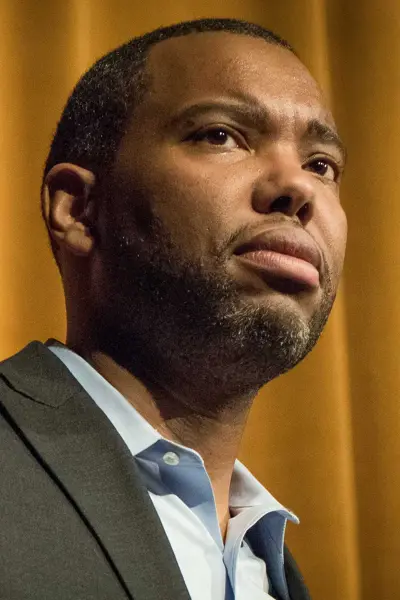
Ta-Nehisi Paul Coates is an American author and journalist. Coates gained a wide readership during his time as national correspondent at The Atlantic, where he wrote about cultural, social, and political issues, particularly regarding African Americans and white supremacy. Coates has worked for The Village Voice, Washington City Paper, and TIME. He has contributed to The New York Times Magazine, The Washington Post, The Washington Monthly, O, and other publications.
