Mark Williams Quotes
We Coloreds have taken a vote and decided that we don’t cotton to that whole emancipation thing. Freedom means having to work for real, think for ourselves, and take consequences along with the rewards. That is just far too much to ask of us Colored People and we demand that it stop
The letter was written in the supposed style of a Black after Emancipation and includes most of the ugly false stereotypes of the worst of the racists of the present and the slaveowners of past times. Williams stated that he was not a racist and was trying to make a point about freedom required risk and responsibility. However, the effort was interpreted by many people, Black and white, to be insulting and a put down of African Americans. At the same time, although most of the Tea Party members were not racists, most of the racists in America were supporters of the Tea Party. Those people interpreted the quotation as "telling it like it is" about Blacks who do not want the responsiblities and risks of freedom and are not yet developed sufficiently to be equal citizens in a democracy.
Mark Williams, Tea Party Spokesperson, Organizer and Leader, Open Letter to “Abraham Lincoln”, CNN, July 16, 2010
Sourced by: Eigen's Political and Historical Quotations

Jamaica, then part of the British Empire which had outlawed slavery, was quite racially integrated with negroes and mulattos in civil positions such as magistrate. When the ship landed, the slave, John Anderson, was kept locked below deck since if he ran off and reached shore, the Jamaican authorities would have declared him a free man. The presence of the captive negro slave leaked out and a group of Jamaicans boarded the ship uninvited and forcibly removed Anderson, He was taken before a Jamaican magistrate who declared him a free person. The ship’s captain demanded that the authorities return the American private property which had been stolen from an American ship by a “mob”. Harrison, the US Counsel complained to the Jamaican Governor of the “Insult” to the American Flag that had taken place and demanded redress. In both efforts, the original decision of the magistrate was supported and Anderson was a free man. Harrison, an ardent Southerner from Virginia was apoplectic and asked the State Department to make this case a major issue in relations with London. His description of the public opinion then in Jamaica was classic. His racial bias was even supplemented by a virulent anti-Semitism because not only had Jewish Jamaican merchants supported abolition of slavery but some had intermarried with Negroes who had converted to Judaism.


The Birth of a Nation was screened at the Woodrow Wilson White House as Wilson was the most racist president since Andrew Johnson. The editorial was persuasive to Boston liberals who were not prepared to impose censorship even to prevent racist propaganda from having an audience.

The first sentence is inscribed on the Jefferson Memorial in Washington DC. The last two sentences are rarely quoted.


Johnson was then Vice President.


In that year he resigned from the War Department in protest of the discrimination and racism in the armed forces.


Robert Allen Zimmerman
This marvelous quotation gives us a picture of the essence of the conflict in conception of freedom between Southern whites and negroes. There was no way to change the large majority of whites’ opinions and it is easy to see why Jim Crow and Southern discrimination evolved as it did. The emancipated Blacks had insufficient power or resources and there was not enough effort or success at changing white attitudes and no where near enough law enforcement to impose the view on the majority of the Southern white population.


The president was commenting on a Donald Trump campaign statement that African American were in the worst shape in history when the reality was just the opposite

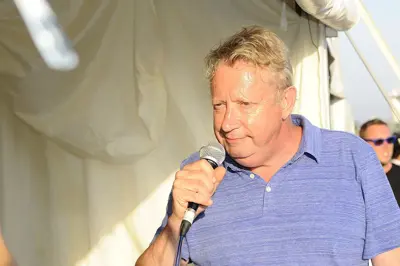
Mark Williams is an English actor, screenwriter and presenter. He first achieved widespread recognition as one of the central performers in the popular BBC sketch show The Fast Show. His film roles include Horace in the 1996 adaptation of 101 Dalmatians and Arthur Weasley in seven of the Harry Potter films. He made recurring appearances as Brian Williams in the BBC television series Doctor Who and as Olaf Petersen in Red Dwarf. Since 2013, Williams has portrayed the title character in the long-running BBC series loosely based on the Father Brown short stories by G. K. Chesterton.
