David A. De Armond Quotes
Negroes are almost too ignorant to eat, scarcely wise enough to breathe, mere existing human machines.
David A. De Armond, 1844-1909, U. S. Congressman (Democrat, MO), House Speech, 1900
Sourced by: Eigen's Political and Historical Quotations


The letter was written in the supposed style of a Black after Emancipation and includes most of the ugly false stereotypes of the worst of the racists of the present and the slaveowners of past times. Williams stated that he was not a racist and was trying to make a point about freedom required risk and responsibility. However, the effort was interpreted by many people, Black and white, to be insulting and a put down of African Americans. At the same time, although most of the Tea Party members were not racists, most of the racists in America were supporters of the Tea Party. Those people interpreted the quotation as "telling it like it is" about Blacks who do not want the responsiblities and risks of freedom and are not yet developed sufficiently to be equal citizens in a democracy.

This quotation is significant. Ibn Khalodun was one of the great intellectual Arab scholars, yet he looked upon Blacks as subhuman and fit for slavery. While Islam preaches the equality of all people, the Arabs had and many still have a raciest view of Blacks. The Arabs were the leaders among the slave traders and many an American Captain of a slave trader bought his slaves from Arab slave traders. Saudi Arabia was the last nation to outlaw legal slavery (1963) and it is still illegally practiced in Saudi Arabia and other Arab states of the Middle East. The attitude can be seen in much of the Arab Middle East even today. For examples, the Muslim Arabs in Northern Sudan refer to the Black non-Islamic Southerners using a derogatory term that means slave.

Under the previous Republican administrations, virulent and overt racists were not generally appointed especially as they were generally then Democrats. However, when Woodrow Wilson was elected president, he not only appointed many overt racists but he himself may have been one of the most racist Presidents every to inhabit the white House. He fired almost all the Blacks who held positions in the Federal government.


President Ford forced him to resign. He had been a holdover from the Nixon Administration. Ford did not chooses him. Nixon appointed him on the advice of the ultra conservatives in the party who liked the fact that he wanted to dismantle many of the FDR New Deal policies. However, he came from Indiana which was the lost racist of all the Northern States. In the 1920s Indiana had the largest membership in the KKK of any state in the Union, and Butz came from this line of racists. He also was convicted for Federal Tax Evasion.


This quotation provides us with several important insights in American history. First, the Director of the FBI was an inveterate racist. Second, he felt no inhibition on sharing this discriminatory view with the Media. Third, he is yet another source for the fact that Blacks did not have a decent opportunity to get an education. There were some Southerners who maintained that they did have such an opportunity in the “Separate but Equal” segregated schools systems of the South. Hoover was not the only racist in the upper ranks of the FBI; most of the leadership was prejudiced. See {620621} and {74219} .

Johnson was then Vice President.


In that year he resigned from the War Department in protest of the discrimination and racism in the armed forces.

Jamaica, then part of the British Empire which had outlawed slavery, was quite racially integrated with negroes and mulattos in civil positions such as magistrate. When the ship landed, the slave, John Anderson, was kept locked below deck since if he ran off and reached shore, the Jamaican authorities would have declared him a free man. The presence of the captive negro slave leaked out and a group of Jamaicans boarded the ship uninvited and forcibly removed Anderson, He was taken before a Jamaican magistrate who declared him a free person. The ship’s captain demanded that the authorities return the American private property which had been stolen from an American ship by a “mob”. Harrison, the US Counsel complained to the Jamaican Governor of the “Insult” to the American Flag that had taken place and demanded redress. In both efforts, the original decision of the magistrate was supported and Anderson was a free man. Harrison, an ardent Southerner from Virginia was apoplectic and asked the State Department to make this case a major issue in relations with London. His description of the public opinion then in Jamaica was classic. His racial bias was even supplemented by a virulent anti-Semitism because not only had Jewish Jamaican merchants supported abolition of slavery but some had intermarried with Negroes who had converted to Judaism.

[This was the first Abolition appeal written by a Black Man. It was published in Boston and was very popular going through two more printings within the next two years.]


Billy Sunday was the most famous preacher of the day. Unlike the vast majority of white preachers, he not only preached to black audiences but exuded an atmosphere of friendliness and comfort around Blacks that amazed most. Most Black leaders thought Sunday was very good for race relations, but there were some clergy like Grimke who criticized him. Sunday was castigated by many racist whites for preaching to Blacks, but he did not go as far as to condemn or preach against racism and the discrimination of the day and he would not preach to an integrated audience. Grimke, in contrast, preached to an integrated congregation and was one of the few white clergy who did in the South. (Washington DC was then a southern, segregated city.) See {585415} for another critique of Sunday.

This quotation illustrates the degree or irrationality that Southerners practiced in considering racial matters. Lee was stating what virtually all Southern “Gentlemen” believed. Here was a class of people who had hardly worked at day in their lives opining on the work attitudes of the class of people who did most of all the work in the South. The Southern Whites not only expected the Negro slave to do the work, but to be enthusiastic about working. And it never even occurred to Lee and most of the other whites that Negro lack of “disposition” to work was the result of the fact that they were forced to work with the benefits going to someone else. It was a character flaw in Blacks, if they were not enthusiastic and disposed to work when forced to. One of the few ways a slave could register his/her protest was to beat the system now and then and do as little work as possible. Free Blacks in the North were among the hardest and most enthusiastic working people in America—certainly moreso than the Southern white gentlemen.
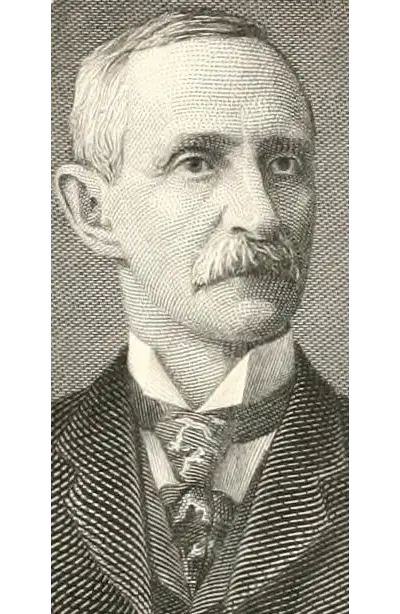
David Albaugh De Armond was a Democratic Representative representing Missouri's 12th congressional district from March 4, 1891 until March 3, 1893, and then Missouri's 6th congressional district from March 4, 1893 until dying in office in 1909.
