Martin Luther King Jr. Quotes
Discrimination is a hellhound that gnaws at Negroes in every waking moment of their lives to remind them that the lie of their inferiority is accepted as truth in the society dominating them.
Martin Luther King Jr., 1929-1968, Clergyman & Civil Rights Leader, Nobel Peace Laureate, Speech, Southern Christian Leadership Conference, Atlanta, August 16, 1967
Sourced by: Eigen's Political and Historical Quotations


Named after penal reformer Johne Howard, 1726-1790. Howard Associations have since been organized in many countries.


Booth was the younger son of a very prominent Northern family of actors. His older brother was considered the greatest American actor, and the rest of the family were abolitionists and vehement Union supporters. They found young John’s views reprehensible.


Robert Allen Zimmerman

Althought most of Seale’s “solutions” were counterproductive and/or ineffectual, and the Black Panthers were regarded as public enemies, Seale was right about some of his complaints including this one. In most of the South the changes forced by the Civil Rights and Voting Rights Acts where just beginning to have significant effect. So there were proportionately very few Blacks on Southern Juries. Even in the North, Blacks did not register to vote in proportion to their numbers so since jury pools were then usually drawn from voter registration lists, Blacks were statistically underrepresented. When a few Blacks were put on a jury panel, the prosecutor had the right of preemptory challenge as did the defense. But there were enough challenges so that the prosecutor could disqualify all the African Americans on the Jury. Even today, this is legal in many jurisdictions and although better than in 1970, then a Black defendant would rarely have African Americans on the jury of “his peers.”

Vladimir Lenin. In their quest for world revolution, the Russian Communists had more problems with arguments in the United States whose reforms and economy had produced a very high standard of living. They knew that to effect a revolution, they had to reach the middle class and the intellectuals. They had little economically to attack America with but they were able to attack the United States morally. Even though segregation was legal in America at that time, many Americans thought it immoral. Most of the rest of the world did also. So that was one of the attack points. Since the communists opposed U. S. racial segregation, many Southern segregationists used a perverted logic and accused everyone who opposed segregation of being a communist. In addition to racial segregation, the Communists attacked other forms of discrimination such as anti-Catholic, anti-Asian, and anti-Semitic (See {638737} ) behavior.

Black protests and demonstrations were emerging throughout the country after a white police officer shot to death an unarmed black teenager in Ferguson, MO. This argument was made by a number of police apologist whites who could not understand the ferocity and passion of the demonstrations, but Giuliani was the most prominent politician taking that viewpoint. See {642521} for the refutation and response.


When passed, the Social Security Act did not cover domestic or agricultural workers. But these were the two occupations that between employed over half of all African Americans. The Black labor leaders like A. Phillip Randolph, supported the Act as their union membership was covered. The Congress, although controlled by the Democrats had the albatross of the "Solid South" which would obstruct anything that would strengthen the Negro. The strategy the President Roosevelt and his new dealers adopted was to institutionalize Social Security for the majority of American workers and then bring in the occupations and groups that had originally been excluded. And this is what they did however, enforcement of Social Security coverage with individual domestic workers was still a problem in the 21st century.


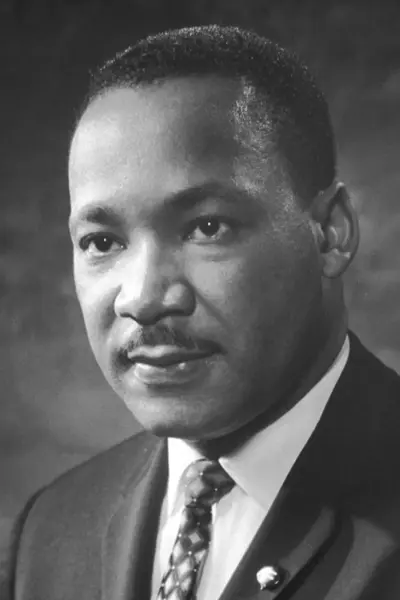
Martin Luther King Jr. was an African American Baptist minister and activist who became the most visible spokesperson and leader in the American civil rights movement from 1955 until his assassination in 1968. King advanced civil rights through nonviolence and civil disobedience, inspired by his Christian beliefs and the nonviolent activism of Mahatma Gandhi. He was the son of early civil rights activist Martin Luther King Sr.
