Jose Marti Quotes
Only those who hate the Negro see hatred in the Negro.
Jose Marti, 1853-1895, Cuban Revolutionary Leader, Manifesto of Montecristi, 1895
Sourced by: Eigen's Political and Historical Quotations


At the time, American racism was rampant, and about 150 Blacks were lynched each year with no punishment for the murderers. The heavyweight boxing champion of the world was a major hero, and the thought of a Black possibly winning the title was unthinkable.


Througout political history, including in America, opportunistic, unscruplous politicians have appealed to the prejudices and hates of subsets of the population for others (usually minorities) to get elected or obtain support for legislation and administrative action. In America this has been an element of all populist movements—an enemy. This quote is particularly enlightening in that it shows that the real need is to have a minority to focus the public against—which one is not as material as the fact that there is one.


This quotation has been one that has been used to argue against Black and other minority racism as well as white racism.


In 1911 the citizens of Honea Path, SC, led by Joshua W. Ashleigh, the State Legislator representing the district and his son, the editor of the local newspaper, dismembered and lynched a Black man, Willis Jackson. Some South Carolinians were distressed and asked the Governor to initiate and investigation. See his later statement on lynching in 1930.


Bilbo was one of the worst racists who ever served in the Congress.
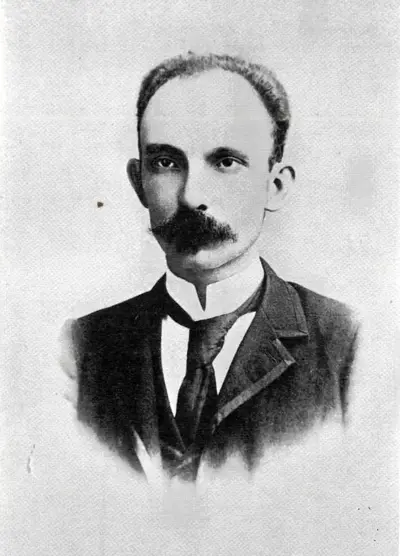
José Julián Martí Pérez was a Cuban poet, philosopher, essayist, journalist, translator, professor, and publisher, who is considered a Cuban national hero because of his role in the liberation of his country. He was also an important figure in Latin American literature. He was very politically active and is considered an important revolutionary philosopher and political theorist. Through his writings and political activity, he became a symbol of Cuba's bid for independence from the Spanish Empire in the 19th century, and is referred to as the "Apostle of Cuban Independence". From adolescence, he dedicated his life to the promotion of liberty, political independence for Cuba, and intellectual independence for all Spanish Americans; his death was used as a cry for Cuban independence from Spain by both the Cuban revolutionaries and those Cubans previously reluctant to start a revolt.
