Jose Marti Quotes
What right do white racist, who believe their race is superior, have for complaining about black racists, who see something special in their own race? What right do black racists, who see a special character in their race, have for complaining about white racists?
This quotation has been one that has been used to argue against Black and other minority racism as well as white racism.
Jose Marti, 1853-1895, Cuban Revolutionary Leader, "Mi Raza", Patria, April 16, 1893
Sourced by: Eigen's Political and Historical Quotations


Like many Black players of the era, Flood suffered endless hateful epithets and curses from a white crowd, many of whom resented the fact that Blacks were integrating baseball, but resented them even more when their performance exceeded that of a favorite white player.

Grady, a Georgian, prompted himself as a spokesman for the “New South” and while he did no advocate slavery and the brutality that had been inflicted on Southern Negroes, he was a strong white supremacist as this quotation demonstrates. He was only “liberal” compared with the total revanchist racists. However, when in the North he spoke kindly about the Negro. See Quotation 643652.


Johnson was the first Black man who won the heavyweight championship at a time when racism in America was rampant. Many whites referred to Jeffries as “The Great White Hope” who would take the champion back for the whites. He didn’t and was beaten badly.


Bilbo was one of the worst racists who ever served in the Congress.


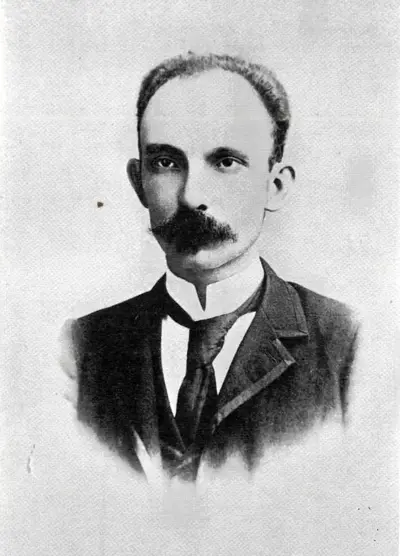
José Julián Martí Pérez was a Cuban poet, philosopher, essayist, journalist, translator, professor, and publisher, who is considered a Cuban national hero because of his role in the liberation of his country. He was also an important figure in Latin American literature. He was very politically active and is considered an important revolutionary philosopher and political theorist. Through his writings and political activity, he became a symbol of Cuba's bid for independence from the Spanish Empire in the 19th century, and is referred to as the "Apostle of Cuban Independence". From adolescence, he dedicated his life to the promotion of liberty, political independence for Cuba, and intellectual independence for all Spanish Americans; his death was used as a cry for Cuban independence from Spain by both the Cuban revolutionaries and those Cubans previously reluctant to start a revolt.
