Theodore G. Bilbo Quotes
Although the race problem may seem to lie dormant at times, it continually exists, lives on and on and sometimes rages with all the fury of a jungle beast. It gnaws at the very vitals of our existence, in time it will sap our strength and destroy the greatness of our American way of life unless solved properly and permanently.
Bilbo was one of the worst racists who ever served in the Congress.
Theodore G. Bilbo, 1877-1947, Mississippi Governor (Democrat), U. S. Senator (Democrat, MS), Take Your Choice: Separation or Mongrelization
Sourced by: Eigen's Political and Historical Quotations


Bilbo was one of the worst racists who ever served in the Congress.

Moynihan was an Assistant Secretary of Labor at the time. At the time politicians did not overtly discuss the racism that had, did then, and still does permeate the American culture. Segregation had just been made illegal but was still rampant. Many whites were highly insulted by this paper. Most Blacks were outraged at Moynihan's general thesis. So the report offended many.


This painting depicted a young black girl walking to school surrounded by 4 U. S. Marshalls protecting her from the crowd of white racists trying to prevent her from attending an elementary school under court order. The vicious race hatred that school integration revealed was the national problem that was then surfacing. The graphic is the illustration that appeared in Look with that name.


Like so many of his other predictions about America, he saw that the evil of racism and slavery was bound to cause the nation to implode. And this was decades before the Civil War, but the problem was inescapable to a critical observer like de Tocqueville.


Johnson was the first Black man who won the heavyweight championship at a time when racism in America was rampant. Many whites referred to Jeffries as “The Great White Hope” who would take the champion back for the whites. He didn’t and was beaten badly.

Named after penal reformer Johne Howard, 1726-1790. Howard Associations have since been organized in many countries.

Negro volunteers were actually preferred under the theory that their ancestry made them more immune to malaria and other tropical diseases in Cuba.

Slogan used to protest the injustice of segregation in the nation’s capital:

In 1911 the citizens of Honea Path, SC, led by Joshua W. Ashleigh, the State Legislator representing the district and his son, the editor of the local newspaper, dismembered and lynched a Black man, Willis Jackson. Some South Carolinians were distressed and asked the Governor to initiate and investigation. See his later statement on lynching in 1930.


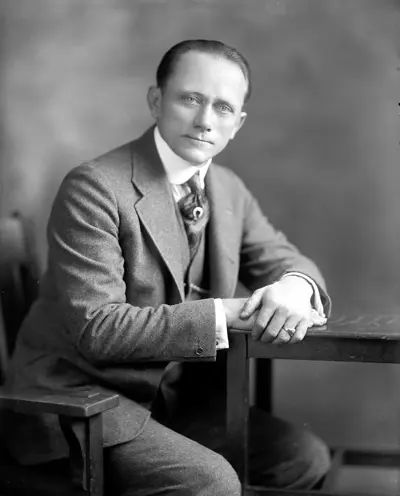
Theodore Gilmore Bilbo was an American politician who twice served as governor of Mississippi (1916–20, 1928–32) and later was elected a U.S. Senator (1935–47). A lifelong Democrat, he was a filibusterer whose name was synonymous with white supremacy—like many Southern Democrats of his era, Bilbo believed that black people were inferior; he defended segregation, and was a member of the Ku Klux Klan.
