Woodrow Wilson Quotes
It is altogether inadvisable for a colored man to enter Princeton.
Wilson has been accused of being one of the most racist Presidents since Reconstruction. Even before he was a Governor and a President and presumably had to cater to Southern racist members of Congress, he was a committed racist. Prior to his Presidency, the Federal Government had been making steady progress in hiring African Americans. Under Wilson there was a wholesale firing of a large proportion of them. Some apologists argue that his League of Nations and other major aspirations required the votes and cooperation of Southern Senators who insisted that many of the blacks be terminated. At the same time, the KKK was near the zenith of its membership and political power and was an intimidating force. Wilson’s home state of New Jersey not only had a large KKK membership but there were lynching of Blacks in his own state and when Governor and President he never asked for any anti-lynching legislation.
Woodrow Wilson, 1856-1924, 28th President of the United States (Democrat, NJ), Letter sent while he was President of Princeton University to a Black who wanted to attend
Sourced by: Eigen's Political and Historical Quotations

In that year he resigned from the War Department in protest of the discrimination and racism in the armed forces.


On the day of the March on Washington the Congress of Racial Equality asked Levitt if he would change his policies on discrimination against Negroes. This quotation, perhaps more than any, other illustrates why legal discrimination was so pernicious. Any builder who tried to break down the housing color barrier would pay an economic penalty and the moral issue became economic. In trying to change America’s attitude on race the people who is the way would then be punished economically. This is why both the black-and-white leadership who wanted desegregation realized that it had to be done by legislation, and not by a process of education and persuasion. In housing a persuaded convert could not act alone without severe penalty. Even after housing discrimination was made illegal, the builders who desegregated suffered somewhat for many years because so many people found ways to evade the law, and government officials at all levels were reluctant to enforce the law.


When passed, the Social Security Act did not cover domestic or agricultural workers. But these were the two occupations that between employed over half of all African Americans. The Black labor leaders like A. Phillip Randolph, supported the Act as their union membership was covered. The Congress, although controlled by the Democrats had the albatross of the "Solid South" which would obstruct anything that would strengthen the Negro. The strategy the President Roosevelt and his new dealers adopted was to institutionalize Social Security for the majority of American workers and then bring in the occupations and groups that had originally been excluded. And this is what they did however, enforcement of Social Security coverage with individual domestic workers was still a problem in the 21st century.

At the time, racial discrimination was so rampant in America that when one of the units of Pepsi Cola, under the leadership of Walter Mack, hired Emmons to sell to Black communities, the Black residents of Northern communities were so unused to seeing Blacks in a “white collar” job, that they were treated as celebrities. Emmons and a few other black salesmen had incredible results yet despite that, the practice did not grow at the time as there were too many white executives who were so prejudiced that the practice was not increased after Mack retired. This short quotation paints a good picture of the nature of racial job discrimination in the North prior to WWII.


In the 1940’s equality and Civil Rights was a good wedge issue for Republicans because the most racist members of Congress were Democrats even though there were many Democrats who advocated strong civil rights. In 1964, there was a party realignment after the Congress passed the Civil Rights Act. After that the most racist members of Congress and the political established switched to the Republican Party and this caused the Republicans to publicly soft pedal civil rights issues. It now became a wedge issue for the democrats, and very few national Republican figures would make such a statement as it would be misinterpreted by the racial right wing of the party.

Qutb was studying at Greeley College and with some Egyptian friends want to a movie theater. Greeley, even though not in the South, practiced racial discrimination in many of their public accommodations and the Civil Rights Law would not be passed for another 15 years or so. The ticked clerk at first would not sell tickets to the dark skinned Egyptians and when one protested, the owner was called. He ruled that as long as they were not American Blacks, they could enter. But Qutb refused.

Perhaps there is no more dramatic quotation illustrating MacArthur’s arrogance where his own views and decisions should obviously prevail regardless of the policies of his superiors and his commander-in-chief. The army had been officially integrated by President Truman, The reality was that the general honestly believed that he had no superiors among the military, that civilians should not control the military, and in any event that the President—Truman—was not fit to be Commander-in-Chief.
Historically, the Southern reaction to early 20th centry Civil Rights efforts was that it was the work of communist and anarchist radicals who were trying to destabilize America. When that argument began to be exposed as false, the next line of defense was that the southern Negro was perfectly happy in the segregated South, and the only problem was Northern liberals, black and white, who came to the South to foment trouble.

The letter was written in the supposed style of a Black after Emancipation and includes most of the ugly false stereotypes of the worst of the racists of the present and the slaveowners of past times. Williams stated that he was not a racist and was trying to make a point about freedom required risk and responsibility. However, the effort was interpreted by many people, Black and white, to be insulting and a put down of African Americans. At the same time, although most of the Tea Party members were not racists, most of the racists in America were supporters of the Tea Party. Those people interpreted the quotation as "telling it like it is" about Blacks who do not want the responsiblities and risks of freedom and are not yet developed sufficiently to be equal citizens in a democracy.


The Daughters of the American Revolution, DAR, was then one of America’s most prestigious organizations. It owned Constitution Hall, then one of the largest and most beautiful concert halls. In 1932 the DAR had passed a resolution banning Negro performers from Constitution Hall. By 1939 few thought they would still maintain the ban, but when Marion Anderson, the great Negro Singer was scheduled for an Easter Concert, the organization refused to rent the hall. Not only did the First Lady resign from the DAR, but she arranged to have the famous Easter Concert at the Lincoln Memorial. It was not only a rebuke to the DAR but it stimulated many other resignations as well as a de facto boycott of Constitution Hall where many citizens would not attend any event even 70 years later. Many notable figures resigned or refused to participate in DAR events thereafter and many artists and producers would never appear in Constitution Hall again.

Booth was the younger son of a very prominent Northern family of actors. His older brother was considered the greatest American actor, and the rest of the family were abolitionists and vehement Union supporters. They found young John’s views reprehensible.


At the time none of the comic book superhero plots, like most popular entertainment and culture, ignored the existence of African Americans.
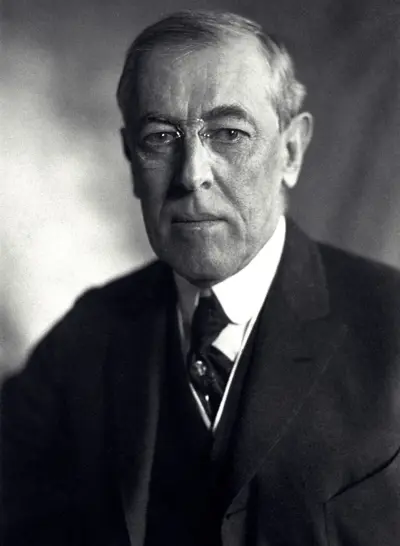
Thomas Woodrow Wilson was an American politician and academic who served as the 28th president of the United States from 1913 to 1921. A member of the Democratic Party, Wilson served as the president of Princeton University and as the 34th governor of New Jersey before winning the 1912 presidential election. As President, Wilson led the United States into World War I in 1917. He was the leading architect of the League of Nations, and his progressive stance on foreign policy came to be known as Wilsonianism. Scholars have generally ranked Wilson in the upper tier of U.S presidents, although he has been criticized for supporting racial segregation and white supremacy.
