Alexis de Tocqueville Quotes
If he presents himself to vote, he runs a risk to his life. Oppressed, he can complain, but if he finds only whites among his judges… His son is excluded from the school where the descendants of Europeans come to be instructed. In theaters he cannot buy for the price of gold the right to be placed at the side of one who was his master; in hospitals he lies apart. The black is permitted to beseech the same God as whites, but not to pray to him at the same alter.
Alexis de Tocqueville, 1805-1859, French Foreign Minister & Writer, Description of Racism in America, Democracy in America
Sourced by: Eigen's Political and Historical Quotations

Booth was the younger son of a very prominent Northern family of actors. His older brother was considered the greatest American actor, and the rest of the family were abolitionists and vehement Union supporters. They found young John’s views reprehensible.

In that year he resigned from the War Department in protest of the discrimination and racism in the armed forces.


He was not only an atheist himself, but he was a major opponent of organized religion which he regarded as one or the major initiators and drivers of slavery, segregation and discrimination. For this reason he was critical of Martin Luther King—{583307}. His irreligiosity had always prevented his gaining much support from his fellow African Americans even though a great writer like H. L. Menken considered Schuyler, "the best writer in America".

Perhaps there is no more dramatic quotation illustrating MacArthur’s arrogance where his own views and decisions should obviously prevail regardless of the policies of his superiors and his commander-in-chief. The army had been officially integrated by President Truman, The reality was that the general honestly believed that he had no superiors among the military, that civilians should not control the military, and in any event that the President—Truman—was not fit to be Commander-in-Chief.


His solution was not to change the prejudice or improve the opportunity for Blacks but to have complete separation of the races. See {625687}.

She was one of the first prominent white southerners to denounce racial segregation.


[This was the first Abolition appeal written by a Black Man. It was published in Boston and despite the fact that it was very critical of whites, was very popular going through two more printings within the next two years.]


Billy Sunday was the most famous preacher of the day. Unlike the vast majority of white preachers, he not only preached to black audiences but exuded an atmosphere of friendliness and comfort around Blacks that amazed most. Most Black leaders thought Sunday was very good for race relations, but there were some critics like Grimke. Sunday was castigated by many racist whites for preaching to Blacks, but he did not go as far as to condemn or preach against racism and the discrimination of the day and he would not preach to an integrated audience. See {585416} for another critique.


Warren a Republican from California who knew Palmer for years, stood up, put his arm around Palmer and told him, “Kyle, you and I will always be friends” and walked out.

This was actually a very courageous statement for an American politician running for national office. As a result of the pressure of this statement President Franklin Roosevelt allowed Black enlistment in the Army Air Forces.

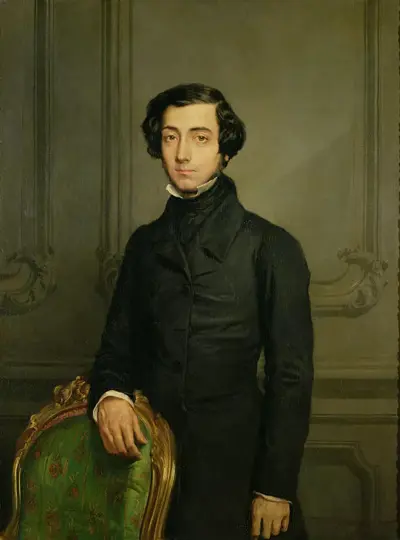
Alexis Charles Henri Clérel, comte de Tocqueville, colloquially known as Tocqueville (/ˈtɒkvɪl, ˈtoʊk-/), was a French aristocrat, diplomat, political scientist, political philosopher and historian. He is best known for his works Democracy in America (appearing in two volumes, 1835 and 1840) and The Old Regime and the Revolution (1856). In both, he analysed the improved living standards and social conditions of individuals as well as their relationship to the market and state in Western societies. Democracy in America was published after Tocqueville's travels in the United States and is today considered an early work of sociology and political science.
