Dick Gregory Quotes
In the South they don't mind how close I get, so long as I don't get too big. In the North they don't mind how big I get, so long as I don't get too close.
Dick Gregory, Comedian & Author, Write-in candidate for President, 1968, Explanation of the difference in racial discrimination between North and South
Sourced by: Eigen's Political and Historical Quotations


She was one of the first prominent white southerners to denounce racial segregation.


Newsletter of the United Sons of Confederate Veterans


Blacks were not allowed to testify in court in the Southern States. The reasons why has never been clear. Many slave keeping societies like Ancient Rome not only allowed slaves to testify in the courts, but required them to do so in many circumstances even when their owners were opposed.

Booth was the younger son of a very prominent Northern family of actors. His older brother was considered the greatest American actor, and the rest of the family were abolitionists and vehement Union supporters. They found young John’s views reprehensible.

[This was the first Abolition appeal written by a Black Man. It was published in Boston and despite the fact that it was very critical of whites, was very popular going through two more printings within the next two years.]


He was not only an atheist himself, but he was a major opponent of organized religion which he regarded as one or the major initiators and drivers of slavery, segregation and discrimination. For this reason he was critical of Martin Luther King—{583307}. His irreligiosity had always prevented his gaining much support from his fellow African Americans even though a great writer like H. L. Menken considered Schuyler, "the best writer in America".
Billy Sunday was the most famous preacher of the day. Unlike the vast majority of white preachers, he not only preached to black audiences but exuded an atmosphere of friendliness and comfort around Blacks that amazed most. Most Black leaders thought Sunday was very good for race relations, but there were some critics like Grimke. Sunday was castigated by many racist whites for preaching to Blacks, but he did not go as far as to condemn or preach against racism and the discrimination of the day and he would not preach to an integrated audience. See {585416} for another critique.

Billy Sunday was the most famous preacher of the day. Unlike the vast majority of white preachers, he not only preached to black audiences but exuded an atmosphere of friendliness and comfort around Blacks that amazed most. Most Black leaders thought Sunday was very good for race relations, but there were some clergy like Grimke who criticized him. Sunday was castigated by many racist whites for preaching to Blacks, but he did not go as far as to condemn or preach against racism and the discrimination of the day and he would not preach to an integrated audience. Grimke, in contrast, preached to an integrated congregation and was one of the few white clergy who did in the South. (Washington DC was then a southern, segregated city.) See {585415} for another critique of Sunday.

Gahdhi’s early career was in South Africa. What makes this quotation very interesting is that it shows Ghandi---one of the great disciples of brotherhood and equality of all men---had a period when he was outraged that Indians would have Blacks (Kaffirs) located in their neighborhood. It illustrates the personal transition that he made from prejudiced, parochial advocate for a particular ethnic group to an advocate and spokesman for all mankind.


President Johnson said this after a meeting with governors from the South and border states, who had criticized his policies on civil rights as well as his vocal support of expanded rights for blacks
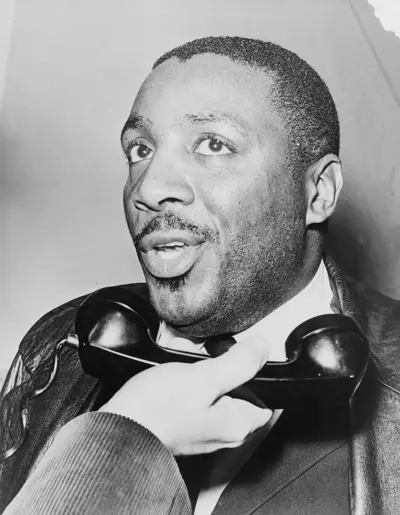
Richard Claxton Gregory was an American comedian, civil rights and vegetarian activist. His writings were best sellers. Gregory became popular among the African-American communities in the southern United States with his "no-holds-barred" sets, poking fun at the bigotry and racism in the United States. In 1961 he became a staple in the comedy clubs, appeared on television, and released comedy record albums.
