Ignatius Donnelly Quotes
To pass this law and then hope that South Carolina … would do justice to the negro is absurd. She has 291,000 whites and 412,000 blacks. To pass such a law would be for the governing power to divest itself of the government and hand it over to a subject and despised caste ... The same is true, more or less, of all the South
Ignatius Donnelly, 1831-1901, U. S. Congressman (Republican, MN), Lt. Governor of Minnesota, Congressional Debate on the 14th Amendment
Sourced by: Eigen's Political and Historical Quotations


Incredible as it seems today, no Black person had ever dined in the White House as a guest of the President. African American servants were common. And Abraham Lincoln had received many Black visitors as had Presidents after him. But no president had ever had a Black person to dine as a social equal. The photo, reproduced here, illustrates the parity. But that was the worst thing a President could do so far as Tillman and his fellow racists were concerned. They had, since the end of the Civil war, used violence and terrorism to murder, maim and/or intimidate the Negro population to remain in an economic and socially inferior position. In Tillman’s state over these decades they had more lynchings than legal executions and there were plenty of them. Newspapers over the South riled up the whites and there was a wave of terror to be sure that the President’s importune action would not be taken as an endorsement of the Negro’s right to any equality or even dignity. This dinner essentially wedded all the Blacks to the Republican Party and all the Southern Whites to the Democratic Party. This would remain the political situation for over 60 years until the Democrats passed the LBJ Civil Rights Act in 1964 and the Republicans decided to solicit the Southern White racists who accepted the invitation and within a few years, there was a complete reversal of party loyalty of most Blacks and most Southern White Racists.


It was not until this publication that people who suggested that discrimination and lack of education and opportunity might have something to do with the problem Blacks faced in society were regarded by many Americans as anything but left wing intellectuals.


Wilson, a history and government professor and college president before politics, was has been accused of being one of the most racist Presidents since Reconstruction. Prior to his Presidency, the Federal Government had been making steady progress in hiring African Americans. Under Wilson there was a wholesale firing of a large proportion of them. Some apologists argue that his League of Nations and other major aspirations required the votes and cooperation of Southern Senators who insisted that many of the blacks be terminated. At the same time, the KKK was near the zenith of its membership and political power and was an intimidating force. Wilson’s home state of New Jersey not only had a large KKK membership but there were lynching of Blacks in his own state and when Governor and President he never asked for any anti-lynching legislation.

After attending a Lincoln speech, Booth said to Lewis Powell, one of his band of conspirators, “Now, by God, I’ll put him through. That is the last speech he will ever make.”


Preclearance was a requirement that any change in the voting or registration laws, rules or procedures needed to be approved by the Federal Justice Department. He was testifying about why preclearance was important and why it was placed in the Voting Rights Act every time it was reauthorized. See {635271} for what happens without preclearance.


The all white regular Mississippi Delegation was selected in elections where Blacks were barred from voting although Blacks were in the majority in Mississippi. In addition, the regular party was advocating obstructing the Supreme Court school integration decisions and the Civil Rights Act that had just been passed. See {637616}. The insurgent group was selected in integrated elections, contained black and white delegates, and was pledged to support and obey the laws. The President could not make the decision unilaterally, but had a great deal of influence.

The Birth of a Nation was screened at the Woodrow Wilson White House as Wilson was the most racist president since Andrew Johnson. The editorial was persuasive to Boston liberals who were not prepared to impose censorship even to prevent racist propaganda from having an audience.


This became one of the most widely quoted statements of the 1960s and 1970s.
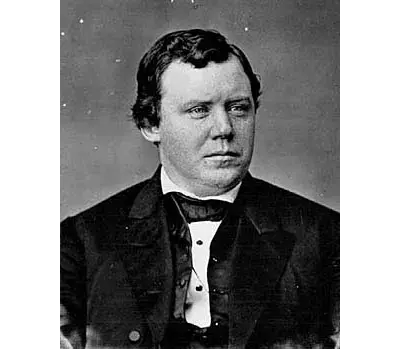
Ignatius Loyola Donnelly was an American Congressman, populist writer, and amateur scientist. He is known primarily now for his fringe theories concerning Atlantis, Catastrophism (especially the idea of an ancient impact event affecting ancient civilizations), and Shakespearean authorship, which many modern historians consider to be pseudoscience and pseudohistory. Donnelly's work corresponds to the writings of late-19th and early-20th century figures such as Helena Blavatsky, Rudolf Steiner, and James Churchward.
