Martin Luther King Jr. Quotes
For years now I have heard the word “Wait”. It rings in the ear of every Negro with piercing familiarity. This “Wait” has almost always meant “Never”.
Martin Luther King Jr., 1929-1968, Clergyman & Civil Rights Leader, Nobel Peace Laureate, Letter from Birmingham Jail, 1963
Sourced by: Eigen's Political and Historical Quotations

Johnson was then Vice President.


He was not only an atheist himself, but he was a major opponent of organized religion which he regarded as one or the major initiators and drivers of slavery, segregation and discrimination. For this reason he was critical of Martin Luther King—{583307}. His irreligiosity had always prevented his gaining much support from his fellow African Americans even though a great writer like H. L. Menken considered Schuyler, "the best writer in America".


Hoover and the FBI were supposed to be enforcing Federal law. However, they could not find any criminal activity on the part of Martin Luther King Jr. They regarded the Civil Rights Movement as a revolutionary threat to the nation. See {620621} and {74219} . So the FBI in an incredible abuse of power, had a meeting of its top officials to plan a strategy for destroying King as a Negro leader in America. We look back on this era where officials who were never elected by anyone, and having no authority from an elected official, took it upon themselves to decide who leaders in America would be.


Instead of standing and saluting as professional athletes have done for decades before games, he kneeled and refused to stand. This caused great public criticism but also some initial support. He was potentially risking his multimillion dollar salary as this technically violated his contract to avoid anything embarrassing to the team. He also donated $1 million to programs in the area that were working to enhance Black/white understanding. Even those who disagreed with his choice of protest defended his right to do so, and after the initial furor, public opinion, while not in agreement about his method, tended to support him for having the courage of his convictions and using his celebrity for a worthy cause. After sensing the public opinion, his team matches his $1 donation. Professional athletes both in the NFL and in other sports then began to do the same as a form of protest for the large, disproportionate, number of black men who were killed, mostly when unarmed, by police. The reference to the “paid leave” was the practice followed by most police departments—usually required by collective bargaining agreements with police unions—of placing police officers accused of committing violations of laws or regulations on paid administrative leave while all the investigations, hearings, and other processes . While this practice protected the rights of those police officers who were not guilty, it ended up paying brutal murders for a some time entire their case was decided or acted upon be the district attorney.

The president was commenting on a Donald Trump campaign statement that African American were in the worst shape in history when the reality was just the opposite


Jackson was a civil rights worker who was murdered by white racists trying to intimidate Blacks from their desegregation efforts. King broadened the moral responsibility to those who did not oppose the segregationist system prevalent in the South.


In the 1940’s equality and Civil Rights was a good wedge issue for Republicans because the most racist members of Congress were Democrats even though there were many Democrats who advocated strong civil rights. In 1964, there was a party realignment after the Congress passed the Civil Rights Act. After that the most racist members of Congress and the political established switched to the Republican Party and this caused the Republicans to publicly soft pedal civil rights issues. It now became a wedge issue for the democrats, and very few national Republican figures would make such a statement as it would be misinterpreted by the racial right wing of the party.


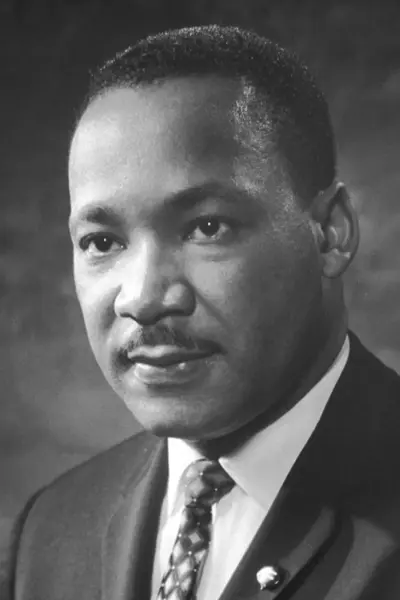
Martin Luther King Jr. was an African American Baptist minister and activist who became the most visible spokesperson and leader in the American civil rights movement from 1955 until his assassination in 1968. King advanced civil rights through nonviolence and civil disobedience, inspired by his Christian beliefs and the nonviolent activism of Mahatma Gandhi. He was the son of early civil rights activist Martin Luther King Sr.
