William C. Sullivan Quotes
We gathered for the purpose of neutralizing King as an effective Negro leader.
Hoover and the FBI were supposed to be enforcing Federal law. However, they could not find any criminal activity on the part of Martin Luther King Jr. They regarded the Civil Rights Movement as a revolutionary threat to the nation. See {620621} and {74219} . So the FBI in an incredible abuse of power, had a meeting of its top officials to plan a strategy for destroying King as a Negro leader in America. We look back on this era where officials who were never elected by anyone, and having no authority from an elected official, took it upon themselves to decide who leaders in America would be.
William C. Sullivan, 1912-1977, Federal Bureau of Investigation Director of Intelligence, Report to Director J. Edgar Hoover, December 24, 1963
Sourced by: Eigen's Political and Historical Quotations

This memo is yet another example of the racism and paranoia about Civil Rights within the FBI. The Director himself was a racist {620620} . Sullivan was reacting to the Martin Luther King Jr. “I Have a Dream” speech during the march on Washington just before. What made King so dangerous was that he was demanding equal rights for Black and he was very influential with the Black community. Therefore, in FBI logic at the time, King was a great danger to the United States. See {74219} for another example.


Johnson was then Vice President.

The president was commenting on a Donald Trump campaign statement that African American were in the worst shape in history when the reality was just the opposite

This painting depicted a young black girl walking to school surrounded by 4 U. S. Marshalls protecting her from the crowd of white racists trying to prevent her from attending an elementary school under court order. The vicious race hatred that school integration revealed was the national problem that was then surfacing. The graphic is the illustration that appeared in Look with that name.

Vladimir Lenin. In their quest for world revolution, the Russian Communists had more problems with arguments in the United States whose reforms and economy had produced a very high standard of living. They knew that to effect a revolution, they had to reach the middle class and the intellectuals. They had little economically to attack America with but they were able to attack the United States morally. Even though segregation was legal in America at that time, many Americans thought it immoral. Most of the rest of the world did also. So that was one of the attack points. Since the communists opposed U. S. racial segregation, many Southern segregationists used a perverted logic and accused everyone who opposed segregation of being a communist. In addition to racial segregation, the Communists attacked other forms of discrimination such as anti-Catholic, anti-Asian, and anti-Semitic (See {638737} ) behavior.

In the 1930s African Americans who traveled were subject to countless humiliations whenever the sought hotels, rooming houses, restaurants and other accommodations. Gas stations would not allow them to use bathrooms and they were reduced to using open fields. Traveling and vacationing was, for Blacks, humiliating. Wikipedia: “Green reviewed hotels and restaurants that did business with African Americans during the time of Jim Crow laws and racial segregation in the United States. He printed 15,000 copies each year. In the 1930s, Green began his work by compiling data on stores in the New York area that accepted black travelers, and published his first guide in 1936. Similar guides had been published for Jewish travelers, who sometimes faced discrimination. Green's guide was so popular that he immediately began to expand its coverage the next year to other US destinations, adding hotel and restaurants as well.”

This phrase was also to be used over 100 years later by Malcolm X. See {624101} and {38291}.


Freedom Rides were interracial groups of Civil Rights advocates who boarded public interstate busses in Washington and rode South through some of the most segregated communities in the country. As the bus stopped at the segregated rest stops, the Black Freedom Riders would use the “white” waiting rooms, toilets, and other facilities which was against the local custom and law. Racist segregationists often brutalized and assaulted the Freedom riders whose leaders demanded Federal Protection. The Attorney General and others were trying to get the local politicians and law enforcement officials to protect the Freedom Riders, but often these were the worst of the racist segregationists. Kennedy thought if he could have a “cooling off period” for a few days, he could persuade the locals to protect the Freedom Riders from the mobs with the threat of sending Federal Marshalls or troops for the protection. So he asked Farmer and other Freedom Ride organizers to stop the Freedom Rides for a few days. This was Farmer’s famous response. The Freedom Rides continued and forced the Federal Government to respond on a timetable they did not prefer.


Preclearance was a requirement that any change in the voting or registration laws, rules or procedures needed to be approved by the Federal Justice Department. He was testifying about why preclearance was important and why it was placed in the Voting Rights Act every time it was reauthorized. See {635271} for what happens without preclearance.

25 of the Union’s TWA Airline Workers in Memphis Tennessee had signed a petition to the Union objecting to the Union’s support for King’s desegregation campaign. Quill responded by inviting King to give the main address at the annual union convention. He was prophetic of the danger King faced, but died before King was assassinated.

Slogan used to protest the injustice of segregation in the nation’s capital:

He had written this text on a newspaper when he was jailed in Birmingham for violating a court order not to demonstrate. A common tactic of the Southern segregationists was to have local segregationist judges issue injunctions against civil rights demonstrations on the grounds that they would promote violence. These were generally unconstitutional, but King and others were jailed until the legal appeal could even be heard.


The all white regular Mississippi Delegation was selected in elections where Blacks were barred from voting although Blacks were in the majority in Mississippi. In addition, the regular party was advocating obstructing the Supreme Court school integration decisions and the Civil Rights Act that had just been passed. See {637616}. The insurgent group was selected in integrated elections, contained black and white delegates, and was pledged to support and obey the laws. The President could not make the decision unilaterally, but had a great deal of influence.

The planning and management of the March on Washington of 1963 was dominated by well educated and/or very experienced leaders of Middle Class type institutions—churches, labor unions, governments, educational institutions, and even middle class entertainment. A few Black critics felt that the deep South Black Sharecroppers were not well represented, intellectually or culturally. To many this was the great genius of the March on Washington where there were a hundred million Americans prepared to find great fault with the march and what they saw was a reflection of themselves trying to protest a grievance.


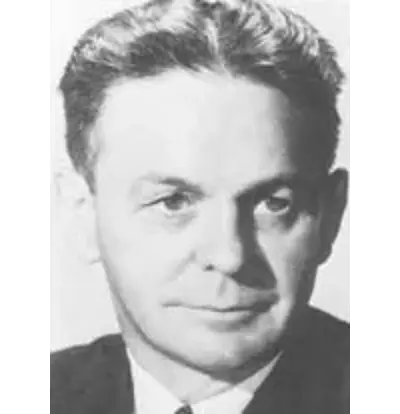
- Born: May 12, 1912
- Died: November 9, 1977
- Nationality: American
- Profession: Law Enforcement Officer
William Cornelius Sullivan was a Federal Bureau of Investigation official who directed the agency's domestic intelligence operations from 1961 to 1971. Sullivan was forced out of the FBI at the end of September 1971 due to disagreements with FBI director J. Edgar Hoover. The following year, Sullivan was appointed as the head of the Justice Department's new Office of National Narcotics Intelligence, which he led from June 1972 to July 1973. Sullivan died in a hunting accident in 1977. His memoir of his thirty-year career in the FBI, written with journalist Bill Brown, was published posthumously by commercial publisher W. W. Norton & Company in 1979.
