Charles Lenox Remond Quotes
The grievances of which we complain, be assured, sir, are not imaginary, but real—not local, but universal—not occasional, but continual, everyday matter-of-fact things and have become, to the disgrace of our common country, matters of history.
Most Northerners knew little about Southern Slavery and its abject cruelty. The institution was so horrendous that most Northerners tended to think of them as aberrant, unusual occurrences. Speakers fanned out throughout the North disclosing the reality.
Charles Lenox Remond, 1678-1751, Agent, Massachusetts Anti-Slavery Society, Delegate of the American Anti-Slavery Society to the World's Anti-Slavery Convention in London, 1847, Speech given in the North
Sourced by: Eigen's Political and Historical Quotations

As a British Loyalist officer, he and his men were dispatched to Savannah, Georgia. There he saw the Southern version of slavery for the first time and was shocked at the cruelty. At the end of the Revolutionary war, he and many other loyalists fled to Canada and began his political career, then representing Britain in the Caribbean. See also {591379}.


She was one of the first prominent white southerners to denounce racial segregation.


He had written this text on a newspaper when he was jailed in Birmingham for violating a court order not to demonstrate. A common tactic of the Southern segregationists was to have local segregationist judges issue injunctions against civil rights demonstrations on the grounds that they would promote violence. These were generally unconstitutional, but King and others were jailed until the legal appeal could even be heard.


Under the previous Republican administrations, virulent and overt racists were not generally appointed especially as they were generally then Democrats. However, when Woodrow Wilson was elected president, he not only appointed many overt racists but he himself may have been one of the most racist Presidents every to inhabit the white House. He fired almost all the Blacks who held positions in the Federal government.


[This was the first Abolition appeal written by a Black Man. It was published in Boston and was very popular going through two more printings within the next two years.]


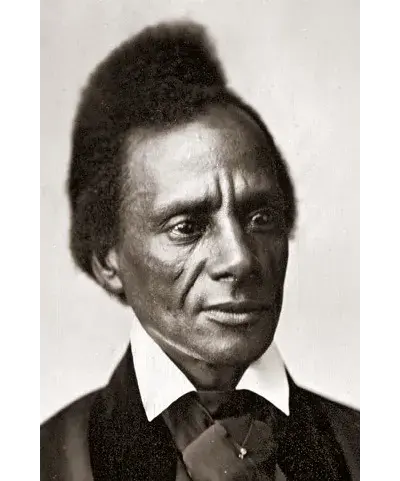
Charles Lenox Remond was an American orator, activist and abolitionist based in Massachusetts. He lectured against slavery across the Northeast, and in 1840 traveled to the British Isles on a tour with William Lloyd Garrison. During the American Civil War, he recruited blacks for the United States Colored Troops, helping staff the first two units sent from Massachusetts. From a large family of African-American entrepreneurs, he was the brother of Sarah Parker Remond, also a lecturer against slavery.
