Charles Lenox Remond Quotes
The time has gone by for colored people to talk of patriotism: ... He used to be proud that his grandfather … fought for liberty in the Revolutionary War. But that time had passed by.
Charles Lenox Remond, 1678-1751, Agent, Massachusetts Anti-Slavery Society, Delegate of the American Anti-Slavery Society to the World's Anti-Slavery Convention in London Address, Massachusetts Anti-Slavery Society, also published in The Liberator, July 10, 1857
Sourced by: Eigen's Political and Historical Quotations


Pickering referred to Jefferson as the “Negro President” because he believed his presidential power rested on the shoulders of slavery.


After emancipation of the slaves legislation and the enforcement thereof were needed to produce freedom. Congress passed much legislation but the Southern anti-Negro forces made enforcement difficult and finally impossible. It would be 100 years before civil rights became a reality in the South and many other parts of the nation.


Qutb was studying at Greeley College and with some Egyptian friends want to a movie theater. Greeley, even though not in the South, practiced racial discrimination in many of their public accommodations and the Civil Rights Law would not be passed for another 15 years or so. The ticked clerk at first would not sell tickets to the dark skinned Egyptians and when one protested, the owner was called. He ruled that as long as they were not American Blacks, they could enter. But Qutb refused.

At the time of the American Revolution there were strong abolitionist forces working against slaver and the slave trade. Southern American slave-owners, the political leadership of the South, feared that England would force slavery reforms on their colonies. Hence, severance from England eliminated that threat. In retrospect, they were quite right for it was England which outlawed the slave trade and led the worldwide anti-slavery movement which had little effect on the new independent America and the political bias in favor of the south of the American compact caused slavery to survive in America, long after the vast majority of the population would have it ended. It took the Civil War to do it.

The Mystery was for many years the only Black Newspaper in America.

This gun control was not even the first in the nation. See {613055}. However it even applied to free Negroes, halfbreeds, as well as slaves. Five years later even though Virginia needed militia for the French and Indian Wars they passed a law barring even Free Blacks from serving in the Militia except “as drummers or trumpeters.” This the whites felt was critical in that most whites did not own firearms. See {613056}.

The law went even further by requiring anyone employing a Black to have seen their certificate of freedom. This law in effect made slave escape to Ohio legally very difficult.


The letter was written in the supposed style of a Black after Emancipation and includes most of the ugly false stereotypes of the worst of the racists of the present and the slaveowners of past times. Williams stated that he was not a racist and was trying to make a point about freedom required risk and responsibility. However, the effort was interpreted by many people, Black and white, to be insulting and a put down of African Americans. At the same time, although most of the Tea Party members were not racists, most of the racists in America were supporters of the Tea Party. Those people interpreted the quotation as "telling it like it is" about Blacks who do not want the responsiblities and risks of freedom and are not yet developed sufficiently to be equal citizens in a democracy.
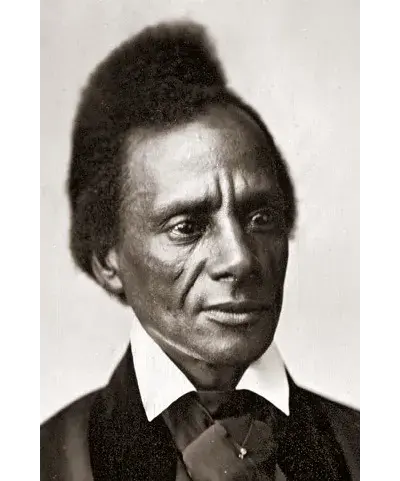
Charles Lenox Remond was an American orator, activist and abolitionist based in Massachusetts. He lectured against slavery across the Northeast, and in 1840 traveled to the British Isles on a tour with William Lloyd Garrison. During the American Civil War, he recruited blacks for the United States Colored Troops, helping staff the first two units sent from Massachusetts. From a large family of African-American entrepreneurs, he was the brother of Sarah Parker Remond, also a lecturer against slavery.
