John Brooks Henderson Quotes
The Negro though nominally free, so far as discriminating legislation could make him so he was yet a slave
After emancipation of the slaves legislation and the enforcement thereof were needed to produce freedom. Congress passed much legislation but the Southern anti-Negro forces made enforcement difficult and finally impossible. It would be 100 years before civil rights became a reality in the South and many other parts of the nation.
John Brooks Henderson, 1826-1913, U. S. Senator (Unionist, MO), Debate on the Civil Right Act of 1866
Sourced by: Eigen's Political and Historical Quotations


This quotation is one of the most enlightening about Reconstruction. The Congress was debating the first Civil Rights Act and Harris was one of the few Southern Whites left in the Congress as Maryland had not seceded. He told the other members of Congress that no matter what they did including passing the Civil Right Act of 1866, the states will ultimately control what happens in the states without worring about the Federal government. All the efforts at equality and civil rights would fail, and the Negro must be kept inferior. Harris lost the debate and the Civil Right Act of 1866 was passed. It was vetoed by the Southern President Andrew Johnson but both Houses of Congress overrode the veto easily. But Harris was right historically as to what would happen, and it would be 100 years before civil rights legislation would be meaningful.


Sumner would later become a Senator. However over a century before Brown v. Board of Education finally outlawed segregated schools, Sumner made one of the basic legal arguments that was involved in the case.

Johnson was then Vice President.


Booth was the younger son of a very prominent Northern family of actors. His older brother was considered the greatest American actor, and the rest of the family were abolitionists and vehement Union supporters. They found young John’s views reprehensible.
The racial inequality did cause a Black revolution in the 1960s. The arrival and influence of Martin Luther King, at the time Black revolution might have turned violent, and the willingness of a substantial number of whites to implement the Civil Rights revolution functioned as a safety valve so that there was substantial reform towards much more racial equality.


There were almost no Blacks who agreed with him on this point. Nor do the vast majority of economists today. But Friedman believed that if there were no minimum wage scale, more lower wage workers would find jobs and learn skills to justify a higher wage later in their careers. To some extent, this used to be so for those occupations which require experience and/or apprenticeship. However, by the 21st century, people in minimum wage jobs can, from their jobs, rarely learn enough to economically justify a higher wage position. A minimum wage job became a dead end job for all but students and people in between other endeavors. Therefore the advocates of minimum wage argue that there should be a living wage so that as President Obama said, “No one should work full time, and not make enough to emerge from poverty.”

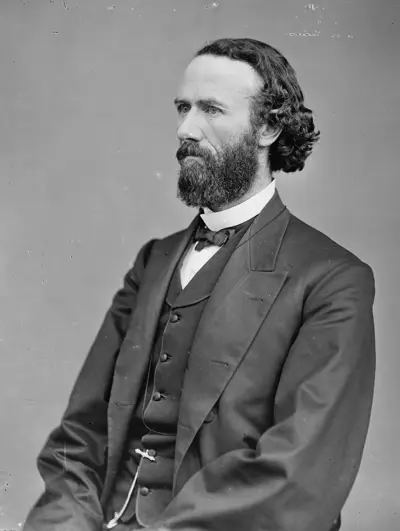
John Brooks Henderson was a United States Senator from Missouri and a co-author of the Thirteenth Amendment to the United States Constitution. For his role in the investigation of the Whiskey Ring, he was considered the first special prosecutor.
