Bartolome de las Casas Quotes
What we committed in the Indies stands out among the most unpardonable offenses ever committed against God and mankind and this trade [in Indian slaves] as one of the most unjust, evil, and cruel among them.
Casas, Bartolomé de las. History of the Indies. Translated by Andrée Collard, Harper & Row, 1971, p. 278.

Most Northerners knew little about Southern Slavery and its abject cruelty. The institution was so horrendous that most Northerners tended to think of them as aberrant, unusual occurrences. Speakers fanned out throughout the North disclosing the reality.

The editorial was in response to the pro-slavery speeches in the Senate of John C. Calhoun.
As a British Loyalist officer, he and his men were dispatched to Savannah, Georgia. There he saw the Southern version of slavery for the first time and was shocked at the cruelty. At the end of the Revolutionary war, he and many other loyalists fled to Canada and began his political career, then representing Britain in the Caribbean. See also {591379}.


As a result of the programs and philosophy he expounded, Leontiev joyously predicted:


Baron Brougham and Vaux


Slaves in the British Colonies and in America were not allowed to testify against a master and in most jurisdictions were not allowed to testify against any white. The de facto result was that there was no practical way to convict a slave owner who violated the laws regarding the treatment of slaves unless the owner performed the act in front of other whites.

Abd al-Rahman Ibn Mohammad. He is generally regarded to be the World’s first social scientist. The largest statue in Tunisia of not of a military leader of king, but of this social scientist.


Although English, Cobett spent time in America and published a newspaper, The Porcupine Gazette, in Philadelphia. We was very conservative but on the issue of slavery his resembled a liberal point of view. He never used sugar, coffee, or rum because slave labor produced them. However, he advocated legally enslaving lazy people, blacks and whites, who would not work.

As an entertainer she had toured much of the world and seen American slavery and that of some other nations. She became a staunch abolitionist and like entertainers in the 20th and 21st centuries she used her celebrity to give anti-slavery lectures and perform for audiences where she donated the proceeds of the event to the abolition cause. She is a particularly interesting political figure in that she seems to be one of the first entertainers to perform for a social cause and become an activist.
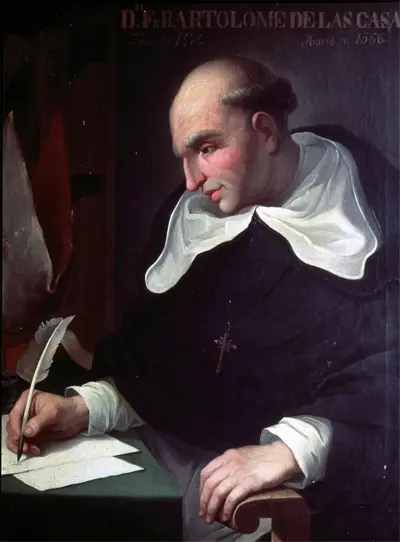
Bartolomé de las Casas was a 16th-century Spanish landowner, friar, priest, and bishop, famed as a historian and social reformer. He arrived in Hispaniola as a layman then became a Dominican friar and priest. He was appointed as the first resident Bishop of Chiapas, and the first officially appointed "Protector of the Indians". His extensive writings, the most famous being A Short Account of the Destruction of the Indies and Historia de Las Indias, chronicle the first decades of colonization of the West Indies. He described the atrocities committed by the colonizers against the indigenous peoples.
