Frederick Law Olmsted Quotes
They [slaves] were frequently punished severely, under the impulse of temporary passion, often without deliberation, and on unfounded suspicion. This was especially the case where they were left to overseers, who, though sometimes men of intelligence and piety, were more often coarse, brutal, and licentious; drinking men, wholly unfitted for the responsibility imposed on them.
Frederick Law Olmsted, 1822-1903, Farmer & Journalist, Father of American Landscape Architecture, A Journey in the Seaboard States, 1856
Sourced by: Eigen's Political and Historical Quotations

Louisiana was then a possession of France

This quotation while difficult for us to fathom today, illustrates a very conservative 18th century view of punishment and law enforcement. The South African high court was very distressed that torture was to be ended. To them, and many others throughout the so called “civilized” European cultures of the time, capital punishment was not a very good deterrent—even for slaves. The execution was usually accompanied by horrible torture and cruelty before death. Slavery was such a horrible life, and the White colonists knew it, that death could be welcome (many slaves had committed suicide). So the suffering at the execution was to serve as a further deterrent. In reality it did not, any more than capital punishment did in the 20th century, but by the logic of the culture and the times, torture was needed as well as capital punishment.

He was also himself a ship owner in the slave trade and he was the brother of the leading Rhode Island abolitionist, Moses Brown. See {585793}. Brown became the first American, prosecuted in federal court for illegal slave trading –-- a prosecution brought, in part, by his own brother. He was, however, acquitted.

As a result of the programs and philosophy he expounded, Leontiev joyously predicted:


Louisiana to this day has a different legal system from the rest of the United States as it was originally based on the French Napoleonic Code. Most people did not realize that Louisiana had strictures against breaking up families—even with slaves.

In 1831 a slave preacher, Nat Turner, led a rebellion in North Carolina killing over 50 whites. Even though Turner and the rebels were captured and executed, whites throughout the South, took vengeance on any slaves they could find. This description was of a North Carolina community.


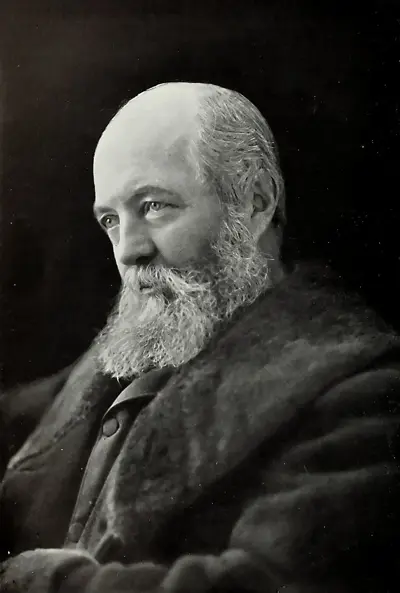
Frederick Law Olmsted was an American landscape architect, journalist, social critic, and public administrator. He was the father of American landscape architecture. Olmsted was famous for co-designing many well-known urban parks with his senior partner Calvert Vaux. One of Olmsted's early works included designing the Walnut Hill Park in New Britain, Connecticut. His later efforts included Central Park and Prospect Park in New York City and Cadwalader Park in Trenton. He headed the pre-eminent landscape architecture and planning consultancy of late nineteenth-century America, which was carried on and expanded by his sons, Frederick Jr and John C, under the name Olmsted Brothers.
