Frederick Douglass Quotes
Judge Taney can do many things, but he cannot…change the essential nature of things—making evil good, and good, evil.
Supreme Court Chief Justice Roger B. Taney, 1777-1864, had written the infamous Dred Scott decision requiring free states to return escaped slaves from the South. This decision widened the gap between North and South and made the Civil War almost inevitable. See {584921}.
Frederick Douglasss, ~1817-1895, Abolitionist & Editor, Recorder of Deeds, District of Columbia, U. S. Minister to Haiti, Speech at New York, on the Occasion of the Anniversary of the American Abolition Society, May 11, 1857
Sourced by: Eigen's Political and Historical Quotations


The “compromise” admitted Misouri to the Union with the right to have slavery and Maine with the right to abolish slavery. The slave states had taken the position that states really had no right to abolish slavery at all, but they compromised on Maine. Many in the non slave states insisted on the aboloution of slavery everywhere, but compromised on Missouri. Luisa Adams, an implacable opponent of slavery on moral and religious grounds, condemned the compromise as politically expedient but morally bankrupt. She saw attempted compromise on the slavery issue as leading to disaster—current and future murder and degradation of human beings and postponing the issue until it would be out of hand.


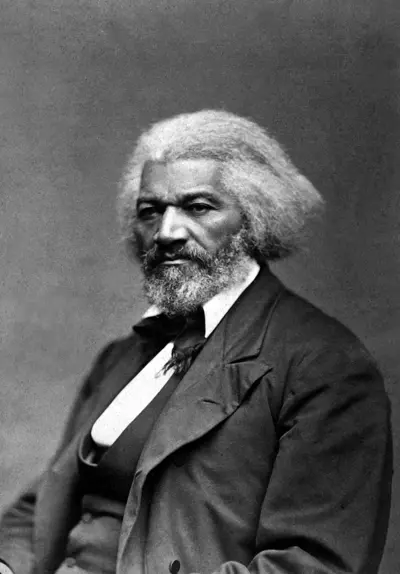
- Born: February 14, 1817
- Died: February 20, 1895
- Nationality: American
- Profession: Abolitionist, Suffragist, Author, Editor, Diplomat
Frederick Douglass was an American social reformer, abolitionist, orator, writer, and statesman. After escaping from slavery in Maryland, he became a national leader of the abolitionist movement in Massachusetts and New York, becoming famous for his oratory and incisive antislavery writings. Accordingly, he was described by abolitionists in his time as a living counterexample to slaveholders' arguments that slaves lacked the intellectual capacity to function as independent American citizens. Likewise, Northerners at the time found it hard to believe that such a great orator had once been a slave.
