LOUISA CATHERINE JOHNSON ADAMS
(Louisa Catherine Adams)
This quotation is very interesting historically. Despite the fact that Washington DC was a thoroughly racially segregated city, and the Southern racists controlled much of Congress, Blacks as well as whites were welcome in the Congressional galleries, and they attended many debates. Slavery and equality were not just debated in the 1850s but the issue was in constant friction from the earliest Congress.
In the 1824 campaign Mrs. Adams made a series of campaign visits with the wives of Washington political notables.
There was a social custom amongst the wealthy women of early American society where if they were moving to a new town, they would present their cards to the established female residents, who would then visit the newcomer at her home. Dolley Madison, anxious to bring some social civilization to Washington, still a rough swamp area, went out of her way to visit all comers and the Cabinet (Department) wives then did the same. However, as the government and Washington grew, this became more and more difficult, and subsequent first ladies wanted more of their privacy and time devoted to family. As America grew in importance, more counties sent ambassadors to Washington, and their wives all expected to be visited and invited. See {620648} for more on the “obligations” of a first lady and cabinet wives.
The “compromise” admitted Misouri to the Union with the right to have slavery and Maine with the right to abolish slavery. The slave states had taken the position that states really had no right to abolish slavery at all, but they compromised on Maine. Many in the non slave states insisted on the aboloution of slavery everywhere, but compromised on Missouri. Luisa Adams, an implacable opponent of slavery on moral and religious grounds, condemned the compromise as politically expedient but morally bankrupt. She saw attempted compromise on the slavery issue as leading to disaster—current and future murder and degradation of human beings and postponing the issue until it would be out of hand.
The First Lady had been born in London and had not set foot in America until she was 26. It was memorable:
At the time, her husband, John Quincy Adams, was a potential candidate for President and his position on all matters was very influential. The Senate had been polarized on the slavery issue and the Missouri Compromise was being debated. Mrs. Adams was well educated and very interested in the substance of political debate, especially involving slavery to which she was adamantly opposed. Even then the body language of a spouse was watched carefully.
First ladies have often advised as to campaign tactics and strategy. In 1824 it was considered unseemly to actively campaign for the presidency. Adams did and won. Advice continued
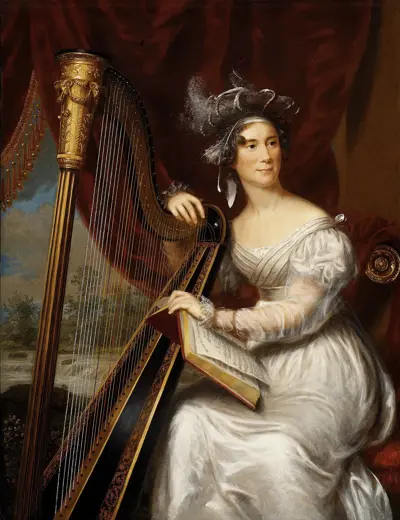
Louisa Catherine Adams was the First Lady of the United States from 1825 to 1829 during the presidency of John Quincy Adams. Born in London, she was the first First Lady to be born outside the United States or the preceding Thirteen Colonies—a distinction that would not be shared until 192 years later by Melania Trump.
