Henry John Temple Quotes
… there is undoubtedly in France a large floating mass of Republicans and Anarchists, ready at any moment to make a disturbance if there was no strong power to resist them; but the persons who would lose by convulsion are infinitely more numerous, and the National Guard of Paris, consisting of nearly 60,000 men, are chiefly persons of this description, and are understood to be decidedly for internal order, and for external peace.
3rd Viscount Palmerston. France has had, ever since their bloody revolution, factions that were for revolution and factions for stability have both always existed.
Henry John Temple, 1784-1865, British Prime Minister (Whig), Letter to Queen Victoria, November 11, 1840
Sourced by: Eigen's Political and Historical Quotations

Louis Napoleon had seized control of France and had very little popular support amongst the aristocracy and middle class. However, the Socialists leading the uprisings frightened them more than Louis Napoleon as the Socialists had the support of the peasants who resented the abuses of the aristocracy and many of the middle class. This was true class warfare and not at all what was possible in the United States when American conservatives would claim “class warfare” when there was a move for more progressive taxation. In Europe, class warfare really meant death and destruction, so for many who knew the history, the claim of “class warfare” was frightening and a large part of the “Red Scare” in the United States.
Lincoln had instituted the first draft in American History and it was terribly resented by many Americans. The draft laws allowed the wealthy and upper middle class to avoid service by paying a $300 fee of hiring a substitute just like in the Vietnam War the upper classes could get College Draft deferments. The mob led mostly by poor Irish, began by protesting the draft; then they attacked the mansions and houses of the wealthy; and then they went after Blacks. The Irish poor feared large numbers of Negroes coming out of slavery and competing for their jobs and lowering the prevailing wages. Blacks were beaten and lynched and 5,000 almost half of the then Negro population were driven to Brooklyn, New Jersey and the New York suburbs. It was the worst riot in United States History.

at the fall of the Soviet Union

Two days later, Ohio National Guardsmen following Rhodes's orders killed four unarmed, non-violent, students on the Kent State campus and wounded nine others. The claim of the governor's apologists was that he was speaking metaphorically and never wanted anyone killed or injured. After this quotation and a few others, politicians—particularly Presidents and Governors—have been more aware that their statements and words may have very significant consequences including death, so they are particularly careful of their rhetoric when there are controversial incidents. Note that Governor Rhodes saw students protesting a war as dangerous revolutionaries. None of the students who were killed had been trained in anything revolutionary.


Commenting on student demonstrations protesting the House Un-American Activities Committee:


Defending his administration and the Chicago police against the charge that they used excessive force and caused a police riot during the Democratic National Convention of 1968:

His advice could be taken by others, but he himself, as the Islamic Caliph was both the civil and religious ruler.

“Commotions” were riots and protests.

Several years before the Battle of Bunker Hill, revolutionary activity had already broken out in the American colonies—See {634132} for an example. This law gave the British authorities much more “clout” in dealing with the “seditious” American activities. It protected English law enforcement officials from being tried in local Colonial courts for murder or assault in putting down insurrections. George Washington and other Patriots were outraged over this law. See {634131}.


Hirsh had uncovered CIA illegal surveillance of anti Vietnam war protesters in the late 1960s. They broke two sets of laws. First, the CIA had no authority to investigate and track American Citizens anywhere but particularly American citizens. Second, the FBI which did have the authority to investigate Americans, were not allowed to use the methods that the CIA did. They violated not only Federal Law and Rules, but also violated the 4th Amendment Rights of thousands of citizens.
the Dutch monarchy supported by England The French fear of course was that the revolutionary fervor spreading to the bourgeois could easily spread to France, and that is exactly what happened 4 years later. See {639769} for more of his view on the Dutch revolutionary spirit that might infect France.


Even in 1837 there were already riots over slavery and race in a number of American Cities. What is particularly interesting about this quotation is Lincoln bemoaning the violance and contrasting the then present with the past when law and order prevailed. Even our greatest President has had a romantic view of the past with respect to law and order, as many Americans have done in almost every American era.
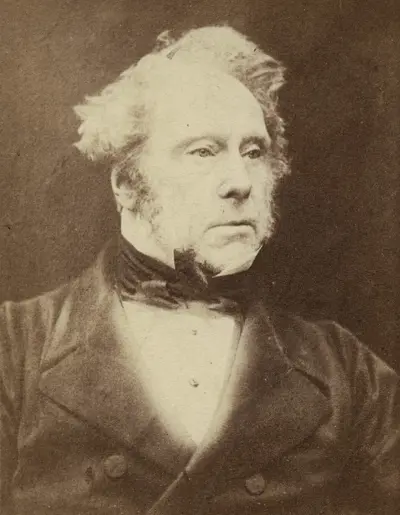
Henry John Temple, 3rd Viscount Palmerston, KG, GCB, PC, FRS was a British statesman, who was twice Prime Minister of the United Kingdom in the mid-19th century. Palmerston dominated British foreign policy during the period 1830 to 1865, when Britain stood at the height of its imperial power. He held office almost continuously from 1807 until his death in 1865. He began his parliamentary career as a Tory, defected to the Whigs in 1830, and became the first prime minister from the newly-formed Liberal Party in 1859. He was highly popular with the British public. David Brown argues "an important part of Palmerston's appeal lay in his dynamism and vigour."
