Richard J. Daley Quotes
This administration and the people of Chicago have never condoned brutality at any time, but they will never permit a lawless violent group of terrorists to menace the lives of millions of people, destroy the purpose of this national political convention, and take over the streets of Chicago.
Defending his administration and the Chicago police against the charge that they used excessive force and caused a police riot during the Democratic National Convention of 1968:
Richard Joseph Daley, 1902-1976, Mayor of Chicago (Democrat), Statement to Democratic National Convention delegates, September 8, 1968
Sourced by: Eigen's Political and Historical Quotations


The Police Commissioner had earlier given the green light to the police to use their clubs brutally and indiscriminately {626665} and afterwards made a statement that has been quoted ever since as he justified violating the Constitution because of their political views—see {626664}.

Even in 1837 there were already riots over slavery and race in a number of American Cities. What is particularly interesting about this quotation is Lincoln bemoaning the violance and contrasting the then present with the past when law and order prevailed. Even our greatest President has had a romantic view of the past with respect to law and order, as many Americans have done in almost every American era.

J. Edgar Hoover, the racist FBI Director, and the Chief of Police of the all white Washington DC Police Force, had made phone calls and sent memos to as many important people they could reach, warning that there was bound to be violence if 100,00 militant Blacks tried to march on Washington. There were twice that number planned for by Bayard Rustin, the man in charge of the March planning, but 250,000 showed up. There were very few incidents and no injuries and deaths as a result of some brilliant planning by Rustin and the cooperation of Attorney General Robert F. Kennedy—the President’s brother—with Rustin. However, the fear spread by Hoover and others caused the major league baseball games to be cancelled, liquor stores to be closed, stores and offices throughout the city were intimidated and closed. But it was one of the best organized and peaceful social/political demonstrations in history.

Lincoln had instituted the first draft in American History and it was terribly resented by many Americans. The draft laws allowed the wealthy and upper middle class to avoid service by paying a $300 fee of hiring a substitute just like in the Vietnam War the upper classes could get College Draft deferments. The mob led mostly by poor Irish, began by protesting the draft; then they attacked the mansions and houses of the wealthy; and then they went after Blacks. The Irish poor feared large numbers of Negroes coming out of slavery and competing for their jobs and lowering the prevailing wages. Blacks were beaten and lynched and 5,000 almost half of the then Negro population were driven to Brooklyn, New Jersey and the New York suburbs. It was the worst riot in United States History.


Two protesters were killed. The demonstration so affected the government that they pressured the Belfast local authorities to announce substantial increases in relief. The economy and the employment picture got no better that year.


Referring to the Los Angeles riots of 1992:

The Mothers of the Plaza de Mayo silently marched every week asking what had happened to the children—the disappeared—who were kidnapped and murdered in the Argentine Dirty War. The President warned the crowd that their protests might attract the death squads again.

Referring to the riots in the Watts section of Los Angeles:

Reacting to urban riots and disorders of the day, the then congressman said:

Quebec French Separatists had kidnapped two government officials and the Prime Minister, for the only instance in peacetime, invoked the 1914 War Measures Act.

Outside the convention, there were demonstrations against the Vietnam War. The Police of Chicago under the direction of Mayor Daily tried to break up the demonstrations and created what the Kener investigation called a “police riot.” The techniques the Chicago police used were those similar to those of dictatorships and many of the delegates could see what was really going on outside via TV sets in their hotel rooms.

Several years before the Battle of Bunker Hill, revolutionary activity had already broken out in the American colonies—See {634132} for an example. This law gave the British authorities much more “clout” in dealing with the “seditious” American activities. It protected English law enforcement officials from being tried in local Colonial courts for murder or assault in putting down insurrections. George Washington and other Patriots were outraged over this law. See {634131}.


Hirsh had uncovered CIA illegal surveillance of anti Vietnam war protesters in the late 1960s. They broke two sets of laws. First, the CIA had no authority to investigate and track American Citizens anywhere but particularly American citizens. Second, the FBI which did have the authority to investigate Americans, were not allowed to use the methods that the CIA did. They violated not only Federal Law and Rules, but also violated the 4th Amendment Rights of thousands of citizens.
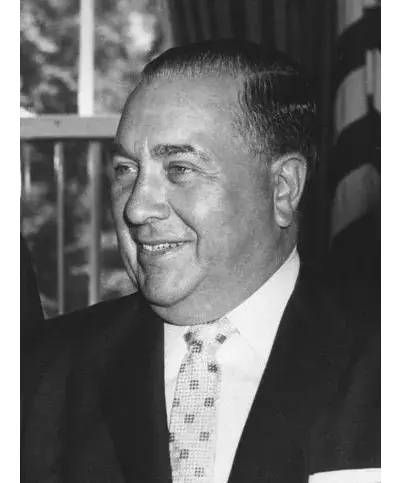
Richard Joseph Daley was an American politician who served as the Mayor of Chicago from 1955 and the chairman of the Cook County Democratic Party Central Committee from 1953 until his death. He has been called "the last of the big city bosses" who controlled and mobilized American cities. Daley was Chicago's third consecutive mayor from the working-class, heavily Irish-American South Side neighborhood of Bridgeport, where he lived his entire life. He was the patriarch of the Daley family, whose members include Richard M. Daley, another former mayor of Chicago; William M. Daley, a former United States Secretary of Commerce; John P. Daley, a member of the Cook County Board of Commissioners; and Patrick Daley Thompson, an alderman of the Chicago City Council.
