John Stuart Mill Quotes
A people who are revolted by an execution, but not shocked at an assassination--require that the public authorities should be armed with much sterner powers of repression than elsewhere, since the first indispensable requisites of civilized life have nothing else to rest on.
John Stuart Mill, 1806-1873, Member of Parliament, British Political Economist, Representative Government, 1861
Sourced by: Eigen's Political and Historical Quotations


Defending his administration and the Chicago police against the charge that they used excessive force and caused a police riot during the Democratic National Convention of 1968:

He was commenting on Lord Castlereagh's use of bribery to pass the Irish Act of Union. His observation of the immorality of politics was dramatic in that he observed that it was similar to the immorality of war.

Wade was urging the Prince to abolish the Death by 1000 Cuts {641825} and simply rely on beheading the form of execution for “lesser” crimes. Note that the Prince’s fears and arguments parallel the same given by modern proponents of the Death Penalty—without it criminals would not be controlled and instability would ensue.


Vladimir Lenin. One of the claimed benefits of Capital Punishment has always been the inhibition of others, but it turned out that it was never very effective at that. However, prevention was Lenin’s major objective so he ordered public hanging instead of shooting—the usual method of execution at the time. This infamous quotation started the new Russian government off on a horrible record of civil and human rights. The people hanged were not particularly guilty of any crime. They were just people who had gotten, or whose family was, rich under the Czar. The disregard for rule of law was most dramatically evidenced by this Lenin order. Needless to say, rich people the world over, saw a great threat to their lives from this new state wanting to export its philosophy.

Vladimir Lenin. At the time of the Russian Revolution, the country was a mess for all except the very rich and the nobles. Food was very scarce and speculators would buy up food and hoard it driving the price way up while some people starved. Bandits were active throughout the country stealing anything at gunpoint so that they could buy food. Meanwhile the country had been at war with Germany and the previous law enforcement was the Czar’s’ police who were now overthrown and there were no law enforcement officers in most places. Much of the nation was in chaos. Lenin and others urged extreme measures which were used to stabilize things at a horrendous cost in human rights and human life. Many Russians were shot, having been unjustly accused by people settling scores. Terror meant the act of terrorizing people in order to get them to behave in a certain way—not unlike the purpose of modern terrorists.


It is a common misconception that anarchists would not have any societal mechanism for preventing and combatting crime. Anarchists believe in the long run that with anarchism the reasons and motivations for crime will disappear, but until then they generally have been willing to use force to protect against force being used against the citizens. To critics, this seems to be government, and a government which uses force. Anarchists have never well detailed how they would manage such a seemingly conflicting situation.

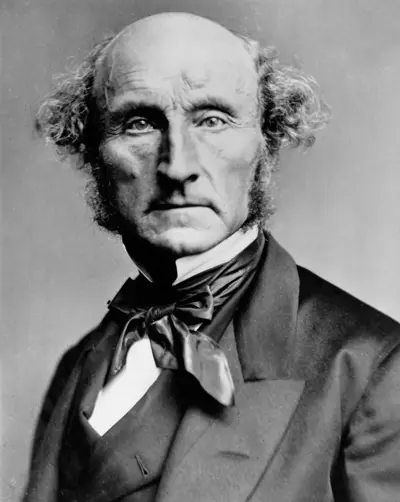
John Stuart Mill, usually cited as J. S. Mill, was an English philosopher, political economist, Member of Parliament, and civil servant. One of the most influential thinkers in the history of classical liberalism, he contributed widely to social theory, political theory, and political economy. Dubbed "the most influential English-speaking philosopher of the nineteenth century", he conceived of liberty as justifying the freedom of the individual in opposition to unlimited state and social control.
