Benjamin Tucker Quotes
Where crime exists, force must exist to repress it. Who denies it? Certainly not Liberty; certainly not the Anarchists … we are the sternest enemies of invasion of person and property, and, although chiefly busy in destroying the causes thereof, have no scruples against such heroic treatment of its immediate manifestations as circumstances and wisdom may dictate
It is a common misconception that anarchists would not have any societal mechanism for preventing and combatting crime. Anarchists believe in the long run that with anarchism the reasons and motivations for crime will disappear, but until then they generally have been willing to use force to protect against force being used against the citizens. To critics, this seems to be government, and a government which uses force. Anarchists have never well detailed how they would manage such a seemingly conflicting situation.
Benjamin Tucker, 1854–1939, Political Philosopher & Individualism Anarchist, Individual Liberty, 1926
Sourced by: Eigen's Political and Historical Quotations


Terror conceptually in France and some other countries was the tool the government used to inhibit criminals.


This article was published under the name of “A Lover Of Peace” but is generally attributed to Paine. He was publishing in Pennsylvania which had a large Quaker, pacifist population and Paine was urging them to consider being armed.

The Justice was trying to justify the inclusion of Sharia as fundamental to the legal system of Pakistan. In addition he advocated allowing the unelected, uneducated, village elders to judge crimes and dispense punishment. This has led to horrendous abuses including a case where a young woman was sentenced to be gang raped because her brother had been seen alone with the daughter of a local wealthy, powerful village man who felt that his family had been dishonored and the only “justice” was to dishonor the family of the brother. There are thousands of cases each year where a system of justice and law of over 1000 years ago is allowed to be used in a modern nation and even worse, ancient tribal customs of revenge are allowed to control legal decisions without any judges or elected officials being involved in the matter.

Charles I had caused the death of his subjects with impunity and was called to account. However, the English Parliament did not know what specific crime the King had committed. Kings had executed people, guilty of crimes and otherwise, for centuries. For what could a king be accountable. Cooke developed the crime of Tyranny and drew up and presented the indictment for that. The King was found guilty and executed. This was the first time in legal history that a ruler was called to account for crimes committed against his own people. It became the foundation for many trials thereafter including that of Saddam Hussein in 2006.

He was trying to justify the arrest, torture and mistreatment of 15 trade union activists in Zimbabwe, and in the process showed himself for the brutal dictator that he had become.

It is hard for us today to understand why intelligent, thoughtful, people would seriously consider and even advocate anarchy. Yet there were many intelligent people who preached anarchy. The key to understanding this is that it is also hard for us to realize how terrible and actually dangerous was typical life under the Russian Government of the Czars. It was not only that most people were serfs--virtually slaves, but the government officials, the military and civilian both, could and did, abuse people in every way imaginable. In America today, if any of us were unfortunate to be the victim of violence, the odds are high that it would be at the hands of another citizen. In Russia (and other countries) at the time, the odds were that the perpetrator of the violence was a government official or government sanctioned person—police, military, aristocrats, civil officers. As but one example. Cossacks would frequently get drunk, pillage and rape a community and kill any who resisted—all with impunity. This quotation from Tolstoy is the classic argument of the anarchist at the time. It was impossible that the absence of government could be as bad as the government then was.

This was one of the first scholarly analysis of the history, psychology, and culture of the American Western Frontiersman. It is still considered one of the best.


The judge found that Blacks and Hispanics were stopped and frisked at a much higher rate than whites despite the fact that whites, when they were stopped and searched had a higher rate of carrying an illegal gun or illegal substances.
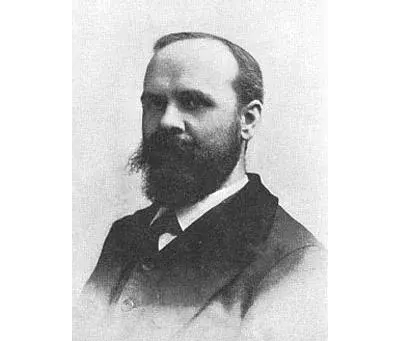
Benjamin Ricketson Tucker was an American anarchist. A 19th-century proponent of individualist anarchism which he called "unterrified Jeffersonianism", Tucker was the editor and publisher of the American individualist anarchist periodical Liberty (1881–1908) as well as a member of the socialist First International.
