JOHN COOKE
(John Cook)
Charles I had caused the death of his subjects with impunity and was called to account. However, the English Parliament did not know what specific crime the King had committed. Kings had executed people, guilty of crimes and otherwise, for centuries. For what could a king be accountable. Cooke developed the crime of Tyranny and drew up and presented the indictment for that. The King was found guilty and executed. This was the first time in legal history that a ruler was called to account for crimes committed against his own people. It became the foundation for many trials thereafter including that of Saddam Hussein in 2006.
Cooke was a bitter foe of monarchy in general and not just of Charles I. His argument here is that when the people support a king, they are breaking the Biblical commandment of not worshipping idols. Thus God is against monarchy. See {634004} for another religious attack on monarchy.
This appears to be one of the earliest causal connections between poverty and crime and one of the earliest considerations of root causes for crime. Cooke was one of the few English jurists who himself came from a working class family.
Prior to Cooke’s indictment of English King Charles I, there was a concept of Royal Impunity—that a sovereign could not legally be called to account for his actions as ruler of the state. The concept of “sovereign immunity” was a concept where the sovereign and his agents could be given immunity for specific actions, but they never would have impunity again where there were no limits to the crimes they might commit against their own people. Charles I refused to even recognize Cooke’s indictment and so have heads of state called to account for their major crimes since then all the way down to Saddam Hussein in 2006 who made the same argument. Cooke was himself hanged, drawn and quartered almost 20 years after the Charles I trial for his part in the “Regicide” so the concept of Royal Impunity did not die quickly.
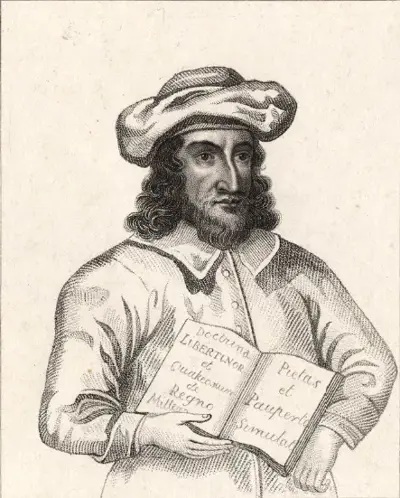
John Cook was the first Solicitor General of the English Commonwealth and led the prosecution of Charles I. Following The Restoration, Cook was convicted of regicide and hanged, drawn and quartered on 16 October 1660. He is considered an international legal icon and progenitor of international criminal law for being the first lawyer to prosecute a head of state for crimes against his people.
