Frederick Jackson Turner Quotes
Western democracy included individual liberty, as well as equality. The frontiersman was impatient of restraints. He knew how to preserve order, even in the absence of legal authority…. the individual was not ready to submit to complex regulations. Population was sparse, there was no multitude of jostling interests, as in older settlements, demanding an elaborate system of personal restraints. Society became atomic. There was a reproduction of the primitive idea of the personality of the law, a crime was more an offense against the victim than a violation of the law of the land.
This was one of the first scholarly analysis of the history, psychology, and culture of the American Western Frontiersman. It is still considered one of the best.
Frederick Jackson Turner, 1861–1932, Historian, “The Problem Of The West”, The Atlantic Monthly, September 1896
Sourced by: Eigen's Political and Historical Quotations


He was one of a Eugenics movement advocates who advocated forced sterilization of mentally retarded and other people, something that a century later was anathema to most Americans.

In 1905 President Roosevelt supported a Pure Food act. Business interests opposed it with such arguments as:


It is a common misconception that anarchists would not have any societal mechanism for preventing and combatting crime. Anarchists believe in the long run that with anarchism the reasons and motivations for crime will disappear, but until then they generally have been willing to use force to protect against force being used against the citizens. To critics, this seems to be government, and a government which uses force. Anarchists have never well detailed how they would manage such a seemingly conflicting situation.


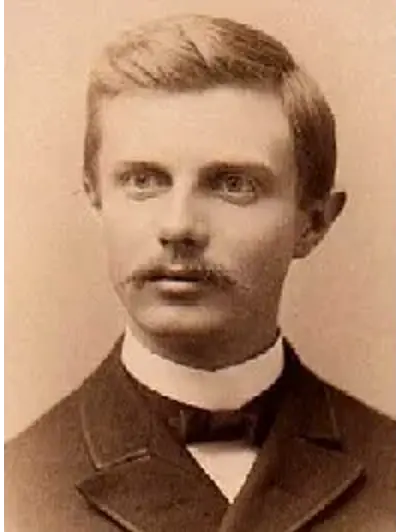
Frederick Jackson Turner was an American historian during the early 20th century, based at the University of Wisconsin until 1910, and then Harvard University. He was known primarily for his anti-Indigenous "Frontier Thesis". He trained many PhDs who became well-known historians. He promoted interdisciplinary and quantitative methods, often with an emphasis on the Midwest. His best known publication is his essay "The Significance of the Frontier in American History", the ideas of which formed the Frontier Thesis. He argued that the moving western frontier exerted a strong influence on American democracy and the American character from the colonial era until 1890. He is also known for his theories of geographical sectionalism. During recent years historians and academics have argued frequently over Turner's work; all agree that the Frontier Thesis has had an enormous effect on historical scholarship.
