Lyndon B. Johnson Quotes
A rioter with a Molotov cocktail in his hands is not fighting for civil rights any more than a Klansman with a sheet on his back and mask on his face. They are lawbreakers, destroyers of constitutional rights and liberties and ultimately destroyers of a free America.
Referring to the riots in the Watts section of Los Angeles:
Lyndon Baines Johnson, 1908-1973, 36th President of the United States (Democrat, TX), Speech, Washington DC, August 20, 1965
Sourced by: Eigen's Political and Historical Quotations

Hale's "Church" was a White Supremicist violent, terrorist, organization. Hale himself was jailed for attemoting to assassinate a Federal Judge.

The Birth of a Nation was screened at the Woodrow Wilson White House as Wilson was the most racist president since Andrew Johnson. The editorial was persuasive to Boston liberals who were not prepared to impose censorship even to prevent racist propaganda from having an audience.

The 1st Amendment is almost absolute in its protection of speech. However, ironically the Untied States has much less internecine conflict with minorities better off than the nations where hate speech is illegal and criminal.

This paraphrased quote originated with Martin Luther King, Jr. See related quote.


This is a classic Egyptian political technique. Egyptian political leaders espouse democratic values and endorse human rights, but control and regulate the actual exercise of rights so that “unacceptable” groups or people can never really assemble or protest. They make an application to demonstrate and find themselves arrested or “detained” so the Egyptians can say that no one is refused the right to assemble. Their permit was not denied.


The “burning” is a reference to the range of murders from the burning of heretics in the Middle Ages to the crematorium ovens of the German Concentration Camps in the Holocaust of WWII.

Wilson, a history and government professor and college president before politics, was has been accused of being one of the most racist Presidents since Reconstruction. Prior to his Presidency, the Federal Government had been making steady progress in hiring African Americans. Under Wilson there was a wholesale firing of a large proportion of them. Some apologists argue that his League of Nations and other major aspirations required the votes and cooperation of Southern Senators who insisted that many of the blacks be terminated. At the same time, the KKK was near the zenith of its membership and political power and was an intimidating force. Wilson’s home state of New Jersey not only had a large KKK membership but there were lynching of Blacks in his own state and when Governor and President he never asked for any anti-lynching legislation.


Defending his administration and the Chicago police against the charge that they used excessive force and caused a police riot during the Democratic National Convention of 1968:

Lincoln had instituted the first draft in American History and it was terribly resented by many Americans. The draft laws allowed the wealthy and upper middle class to avoid service by paying a $300 fee of hiring a substitute just like in the Vietnam War the upper classes could get College Draft deferments. The mob led mostly by poor Irish, began by protesting the draft; then they attacked the mansions and houses of the wealthy; and then they went after Blacks. The Irish poor feared large numbers of Negroes coming out of slavery and competing for their jobs and lowering the prevailing wages. Blacks were beaten and lynched and 5,000 almost half of the then Negro population were driven to Brooklyn, New Jersey and the New York suburbs. It was the worst riot in United States History.
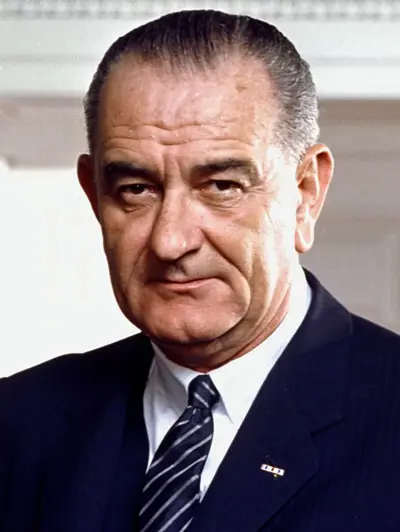
Lyndon Baines Johnson, often referred to by his initials LBJ, was the 36th president of the United States, in office from 1963 to 1969. He served as the 37th vice president from 1961 to 1963 and assumed the presidency following the assassination of President John F. Kennedy. A Democrat from Texas, Johnson was also a United States representative and later majority leader in the United States Senate. Johnson is one of only four people to have served, at various times, in all four federal elected positions.
