John Conyers Quotes
Those weren't criminals in LA. Those were outraged citizens.
Referring to the Los Angeles riots of 1992:
John Conyers, U. S. Congressman (Democrat, MI), May 5, 1992
Sourced by: Eigen's Political and Historical Quotations


This quote is often cited to imply that Luther endorsed rioting which is not the case. See the related quotes from the same speech for the larger context of the quote which makes clear Luther’s true views of the unproductiveness and destructiveness of rioting.

Reacting to urban riots and disorders of the day, the then congressman said:


Defending his administration and the Chicago police against the charge that they used excessive force and caused a police riot during the Democratic National Convention of 1968:

Berrigan and others had entered a draft board office in Maryland and burned the records in front of reporters and onlookers:

The law enforcement officers were the ones who broke the law when they beat and brutalized the peaceful civil rights marchers. The “white niggers” refer to the white marchers including clergy.


Referring to the riots in the Watts section of Los Angeles:


Instead of standing and saluting as professional athletes have done for decades before games, he kneeled and refused to stand. This caused great public criticism but also some initial support. He was potentially risking his multimillion dollar salary as this technically violated his contract to avoid anything embarrassing to the team. He also donated $1 million to programs in the area that were working to enhance Black/white understanding. Even those who disagreed with his choice of protest defended his right to do so, and after the initial furor, public opinion, while not in agreement about his method, tended to support him for having the courage of his convictions and using his celebrity for a worthy cause. After sensing the public opinion, his team matches his $1 donation. Professional athletes both in the NFL and in other sports then began to do the same as a form of protest for the large, disproportionate, number of black men who were killed, mostly when unarmed, by police. The reference to the “paid leave” was the practice followed by most police departments—usually required by collective bargaining agreements with police unions—of placing police officers accused of committing violations of laws or regulations on paid administrative leave while all the investigations, hearings, and other processes . While this practice protected the rights of those police officers who were not guilty, it ended up paying brutal murders for a some time entire their case was decided or acted upon be the district attorney.

J. Edgar Hoover, the racist FBI Director, and the Chief of Police of the all white Washington DC Police Force, had made phone calls and sent memos to as many important people they could reach, warning that there was bound to be violence if 100,00 militant Blacks tried to march on Washington. There were twice that number planned for by Bayard Rustin, the man in charge of the March planning, but 250,000 showed up. There were very few incidents and no injuries and deaths as a result of some brilliant planning by Rustin and the cooperation of Attorney General Robert F. Kennedy—the President’s brother—with Rustin. However, the fear spread by Hoover and others caused the major league baseball games to be cancelled, liquor stores to be closed, stores and offices throughout the city were intimidated and closed. But it was one of the best organized and peaceful social/political demonstrations in history.

The Police Commissioner had earlier given the green light to the police to use their clubs brutally and indiscriminately {626665} and afterwards made a statement that has been quoted ever since as he justified violating the Constitution because of their political views—see {626664}.

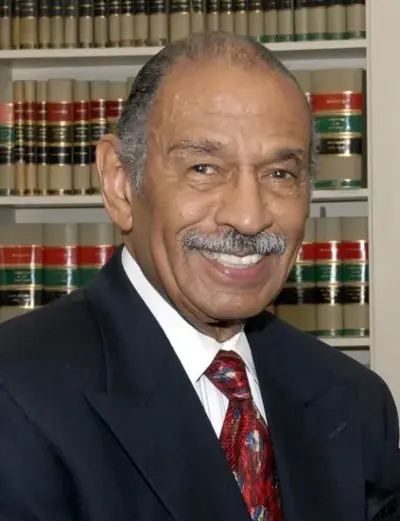
John James Conyers Jr. was an American politician of the Democratic Party who served as a U.S. Representative for Michigan from 1965 to 2017. The districts he represented always included part of western Detroit. During his final three terms, his district included many of Detroit's western suburbs, as well as a large portion of the Downriver area.
